How to Measure Influencer Marketing ROI (B2B Guide)
Measuring influencer marketing ROI helps B2B brands understand which partnerships drive real business results. This guide covers the metrics, tracking methods, and reporting frameworks used to evaluate campaign performance.

.webp)
How to Measure Influencer Marketing ROI: The B2B Measurement Stack
The standard ROI formula — revenue minus cost, divided by cost — breaks the moment you apply it to B2B influencer marketing. B2B buyers don't convert on first touch. The average enterprise buying cycle runs three to twelve months. By the time a deal closes, the influencer post that started it all is buried under dozens of other touchpoints. Run the formula at day 30 and you'll conclude the campaign failed. Run it at month six and you might find it was your best-performing channel.
Madhav Bhandari, Head of Marketing at Storylane, put the challenge plainly: their influencer program generated over 700,000 impressions in a single month, but pinning a revenue number to those impressions required piecing together signals from multiple sources, not a single dashboard.
The fix isn't a better formula. It's a different approach: a layered measurement stack that tells you what to track at 30 days, 90 days, and six months, and how to use those signals together to defend your budget and scale what's working.
1. The B2B Measurement Stack
Most B2B teams only measure Layer 1 — awareness signals — and then wonder why finance doesn't approve budget for the next campaign. The B2B Measurement Stack organizes your metrics into three layers, each with a different time horizon and a different conversation it enables.
Layer 1: Awareness Signals (Check at 30 Days)
These metrics tell you whether the right people saw your content. They're the easiest to collect and the most commonly over-relied upon.
• Impressions and reach from sponsored posts
• LinkedIn engagement rate: 2–5% is a strong benchmark for B2B sponsored content. Below 1% suggests audience mismatch.
• CPM: On LinkedIn, expect $30–$80 for sponsored creator content. A CPM above $80 should prompt a renegotiation or creator swap.
• Branded search lift in Google Search Console — set your baseline before the campaign goes live
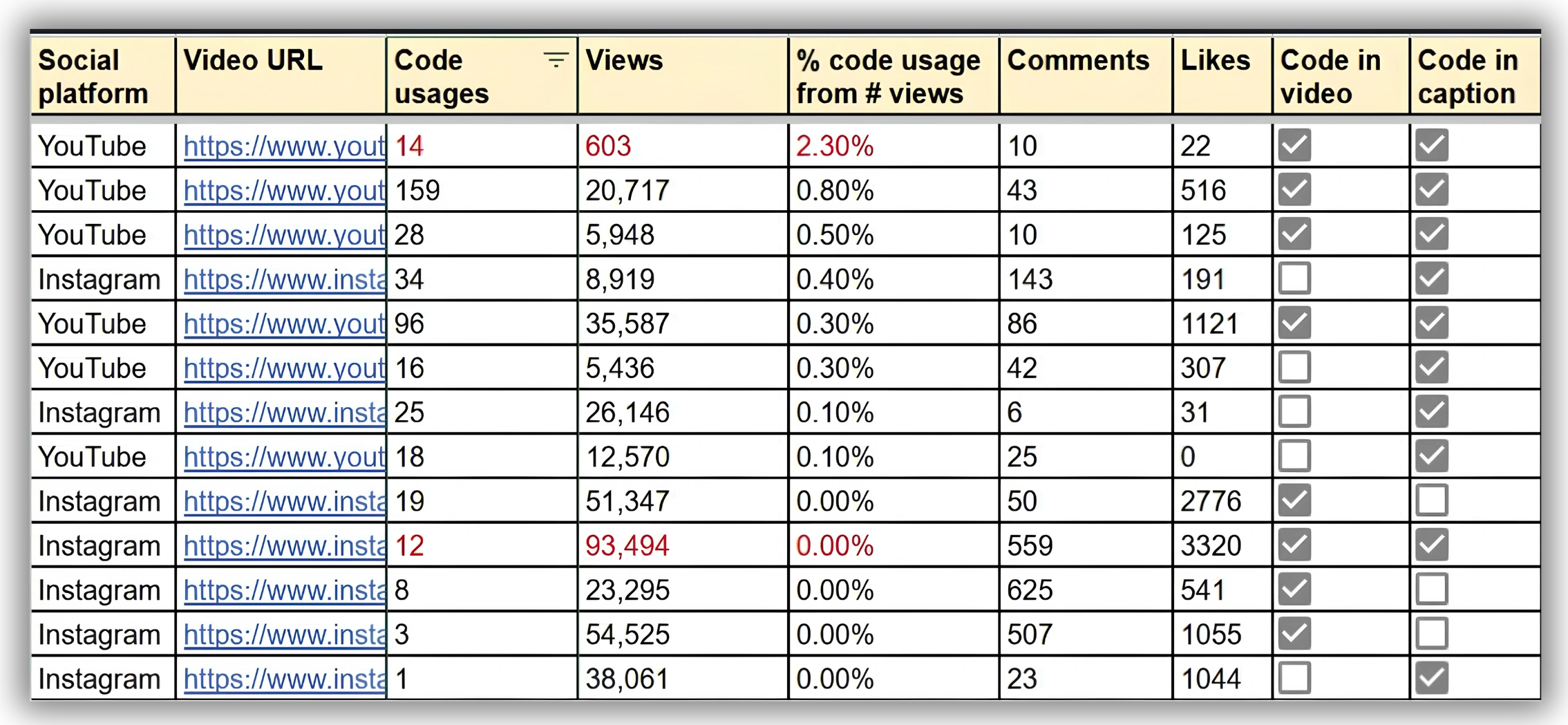
Sarah Adam of Wix has the data to prove that raw impressions don't tell the full story: coupon code usage in Wix's campaigns showed no consistent correlation with view counts. Quality of audience matters as much as volume. Use influencer marketing KPIs to build your Layer 1 scorecard.
Layer 2: Pipeline Signals (Check at 90 Days)
This is where most B2B teams give up — and where the real signal lives. Pipeline signals tie influencer activity to commercial intent.
• "How did you hear about us" survey responses naming specific creators
• UTM-tagged landing page traffic and demo or trial requests from influencer-sourced visitors
• MQL-to-SQL conversion rate for influencer-sourced leads: expect a 10–20% improvement versus paid traffic, because influencer audiences arrive with pre-built trust
• Branded search volume trend (month-over-month growth, not just a spike)
Jeremy Barbara of doola found that survey attribution consistently ran 2–3 times higher than promo code usage for the same campaigns. If you're only looking at link and code data, you're cutting your actual results in half.
.webp)
Layer 3: Revenue Signals (Check at 6 Months)
Layer 3 is the hardest to attribute directly, but it's what keeps the budget alive.
• Closed-won deals where the customer mentioned a creator in onboarding surveys or sales calls
• Closed-won versus closed-lost trend: track whether "brand familiarity" appears more frequently in won deals over time
• New MRR correlation with peak influencer impression months (imperfect but directional)
Dev Basu, B2B SaaS marketer, recommends going directly into your CRM and reading through closed-won and closed-lost reasons. Over time, if influencer-driven brand awareness is working, you'll see "brand familiarity" or "heard of you from [creator]" appearing more often in won deals and less in lost ones. That trend is your Layer 3 signal.
.webp)
2. The 6 Metrics That Matter — With Benchmarks
The table below maps each metric to its layer, the benchmark that separates good from average, and when to pull the data. Cross-reference this against your own influencer marketing KPIs framework.
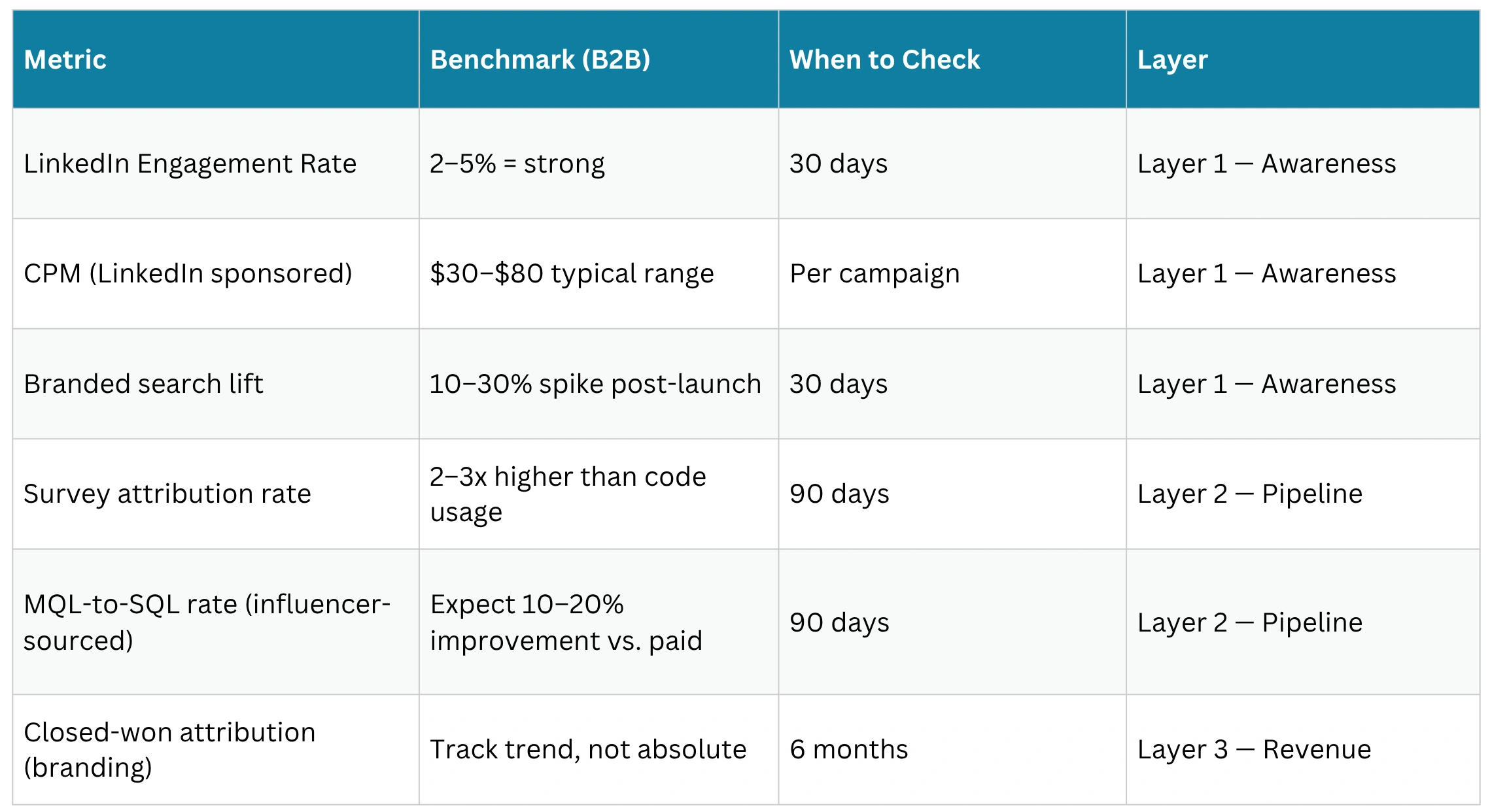
A note on CPM: use the CPM calculator to benchmark each creator before you commit to a deal. If a creator's CPM runs above $100 on LinkedIn, negotiate on deliverables or move budget to a higher-volume creator.
3. Set Up Your Tracking Infrastructure Before the Campaign Launches
Every top-ranking article on influencer marketing ROI tells you what to measure. Almost none of them explain how to make sure the data is actually captured. Here's the infrastructure to put in place before a single post goes live.
1. UTM naming convention: standardize your parameters as source=favikon-influencer, medium=creator-post, campaign=[creator-name]-[month]. A consistent naming convention means your GA4 reports are readable six months later.
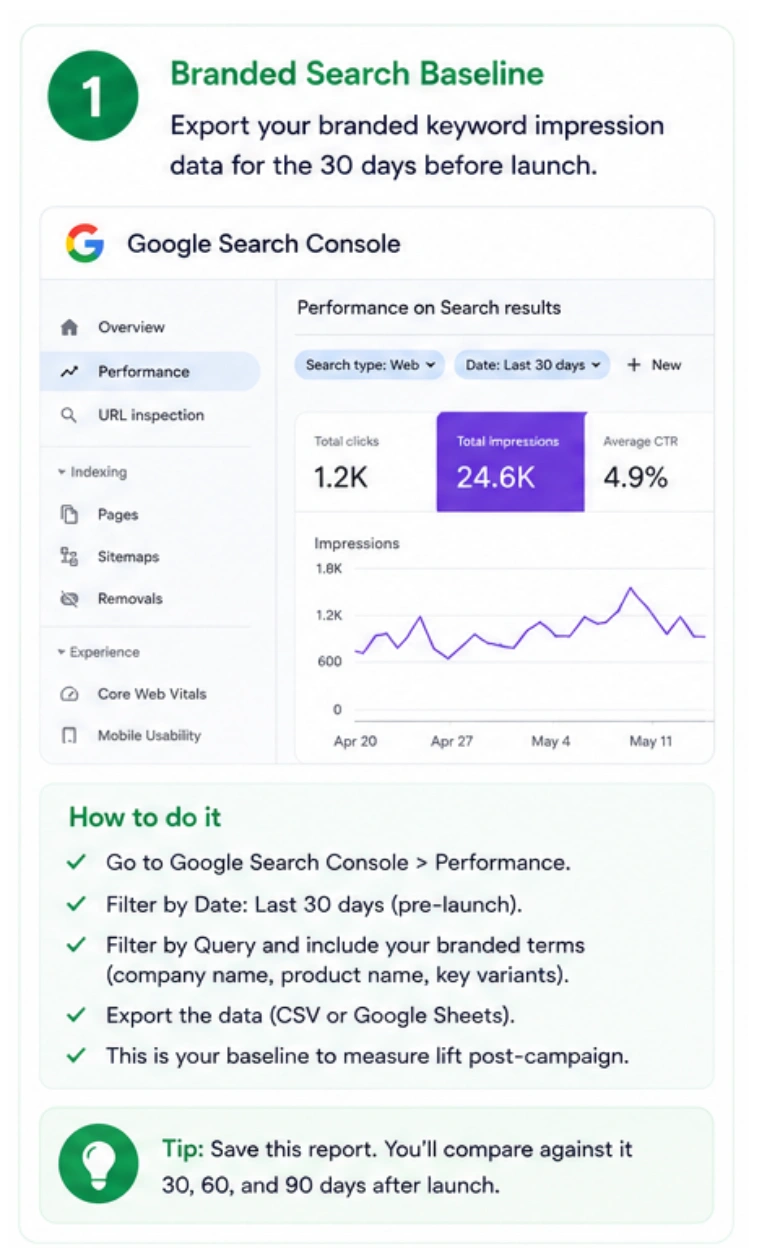
2. Branded search baseline: go into Google Search Console and export your branded keyword impression data for the 30 days before launch. This is the number you'll compare against.
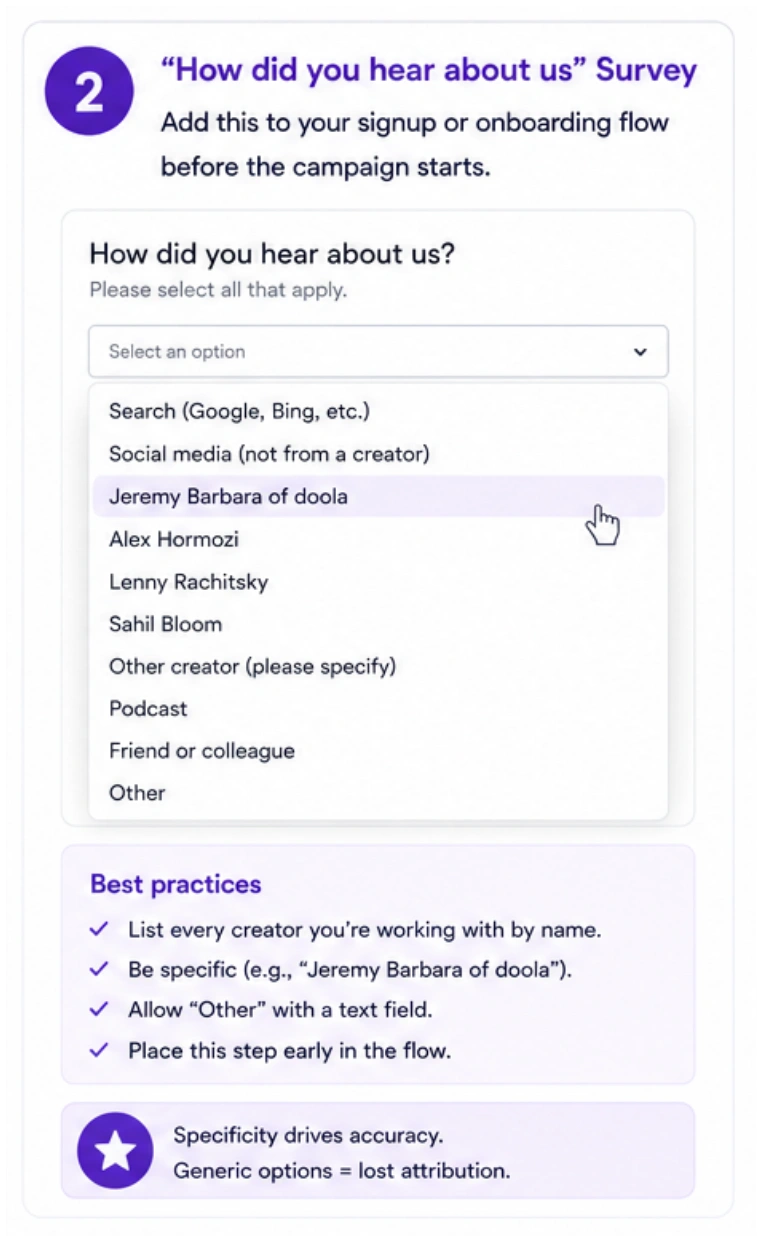
3. "How did you hear about us" survey: add this to your signup or onboarding flow before the campaign starts. Include a dropdown with all creator names you're working with — Jeremy Barbara of doola found this specificity was critical for accurate attribution.
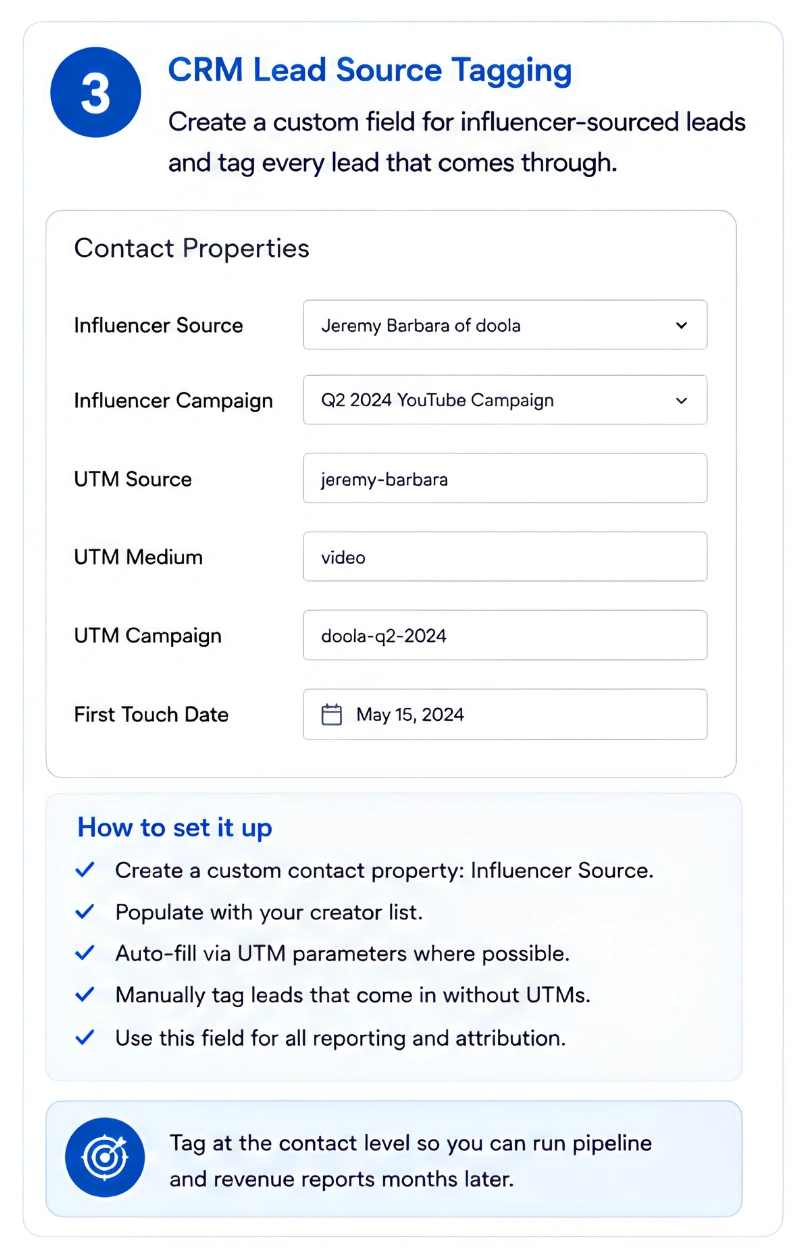
4. CRM lead source tagging: create a custom field for influencer-sourced leads. Every lead that comes through an influencer UTM link should be tagged at the contact level so you can run pipeline and revenue reports months later.
5. Creator performance baseline: use Favikon's campaign tracking to capture the Authority Score and engagement rate of each creator before activation. This gives you a benchmark to compare post-campaign performance against.
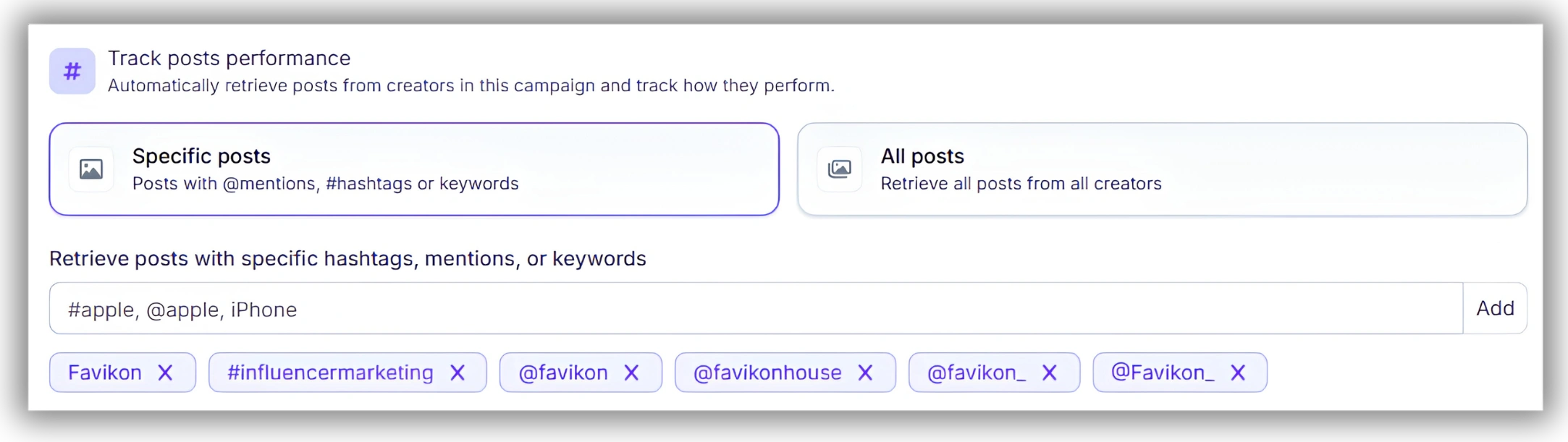
Watch how it works:
4. How Long to Wait for Results
B2B influencer marketing doesn't generate a return in the first two weeks. Here's a realistic timeline based on practitioner experience.
• 30 days: Awareness spike. Check branded search lift, CPM, and engagement rate. If engagement is below 1%, flag the creator for review.
• 90 days: Pipeline signal. Pull survey attribution data, UTM-sourced leads, and MQL-to-SQL rates. This is your first real read on whether the audience has commercial intent.
• 6 months: Revenue signal. Read closed-won notes, check MRR correlation, and look at brand familiarity trends in your CRM.
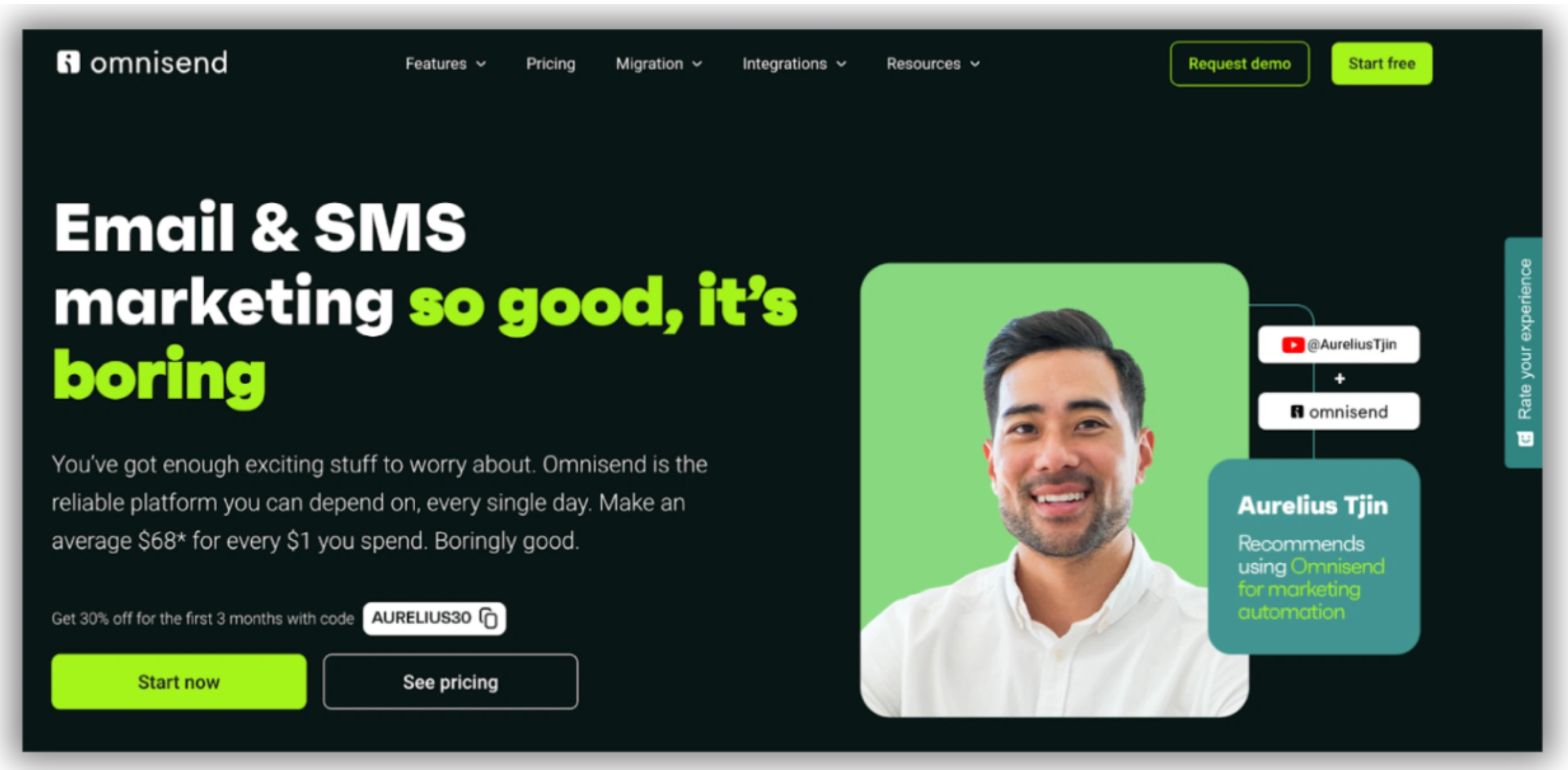
Adele of Omnisend put it clearly: in B2B, buyers don't migrate from their current tools quickly. It takes time — but when they're ready to buy, they'll remember the discount code they saved from the creator's post months ago.
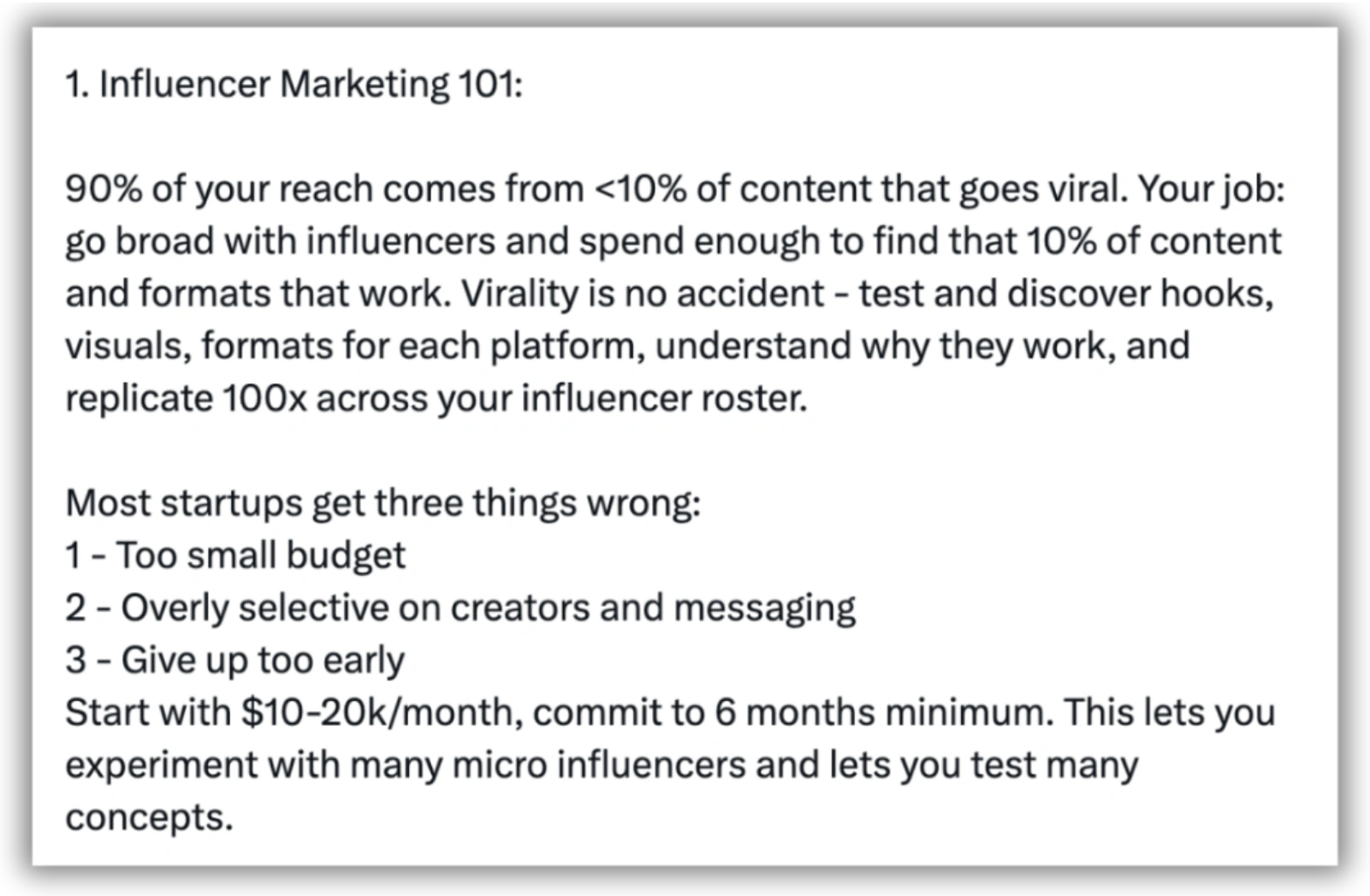
Grant Lee of Gamma goes further: he recommends a minimum of six months and a $10,000 budget before you can draw any meaningful conclusions. Most of the results will come from a small number of campaigns — you need enough volume to identify what's working.
Before you even start setting timelines, it's worth reading how to set campaign goals so your 30/90/180-day checkpoints are tied to pre-agreed success criteria, not post-hoc rationalisation.
5. Finding the Right Creators to Measure In the First Place
None of this measurement infrastructure matters if you're working with creators whose audiences don't match your ICP. The most common reason B2B influencer programs fail at Layer 2 isn't poor tracking — it's audience mismatch that was never caught during vetting.
Favikon's campaign tracking module lets you filter creators by niche, audience seniority, company size, and engagement benchmarks before you commit budget. You can track each creator's Authority Score, run performance comparisons across campaigns, and pull CPM estimates using the built-in CPM calculator — all in one place.
If you're running LinkedIn campaigns specifically, the LinkedIn EMV calculator gives you a way to frame creator value in terms finance teams understand.
Frequently Asked Questions
What is a good ROI for B2B influencer marketing?
There is no single number because B2B buyers take 3–12 months to convert. Focus instead on CPM ($30–$80 on LinkedIn is competitive), pipeline correlation at 90 days, and revenue attribution at 6 months.
How do I prove influencer marketing ROI to my CFO?
Combine three data points: a branded search lift in GSC (easy to show), survey attribution from "how did you hear about us" data, and a correlation between campaign months and new MRR. Layer 1 gets you the conversation; Layer 2 and 3 keep the budget.
How long should I run a B2B influencer campaign before judging it?
Grant Lee of Gamma recommends a minimum of six months and a $10,000 budget before drawing conclusions. Most results come from a small number of campaigns — you need enough volume to find what works.
What tools do I need for influencer tracking?
At minimum: Google Search Console (branded search baseline), your CRM (UTM tagging + lead source field), and a post-signup survey. Favikon's campaign tracking module handles UTM generation and creator performance reporting in one place.
Why are my influencer leads not converting?
Three common reasons: (1) You pitched a free trial or demo instead of a lead magnet — lower-friction offers convert better from cold awareness. (2) You stopped measuring at 30 days — B2B buying cycles average 3–12 months. (3) Your CRM isn't tagging influencer-sourced leads separately, so they look like organic.
Also See 👀
➡️ HOW TO FIND INFLUENCER EMAIL ADDRESSES
➡️ HOW TO SEARCH FOR ANY POSTS ON LINKEDIN
➡️ FAVIKON INFLUENCER DATABASE — 10M+ PROFILES
Others articles