Influencer Marketing KPIs: Set, Track, Prove ROI
The right KPIs help you measure influencer marketing performance beyond likes and views. This guide explains how to choose meaningful metrics, track results, and demonstrate the impact of your campaigns.

Influencer Marketing KPIs: How to Set Them, Track Them, and Actually Prove ROI
You already know the list. Reach. Impressions. Engagement rate. Conversions. Every influencer marketing guide published in the last five years covers the same ten metrics in the same order. The problem is not knowing what to track. The problem is that most campaigns end with a slide deck full of reach numbers and a CFO asking what it actually drove. Setting KPIs takes twenty minutes in a meeting. Tracking them takes three weeks of chasing UTM data, screenshotting posts, and emailing influencers for their backend analytics — if the campaign was set up to capture that data at all. This guide does not repeat the list. It explains which KPIs are easy to track, which require setup before the campaign starts, and which ones actually move budget decisions — and why most teams never get there.
1. Why Most Influencer Campaigns Fail at Measurement (Not Goal-Setting)
The measurement gap in influencer marketing is not a knowledge problem. Marketing teams know what a conversion rate is. They know what CPL means. The failure happens at setup — specifically, the assumption that KPI tracking can be figured out after the campaign ends.
It cannot. Attribution is not retroactive. If no UTM parameters were added to the creator's link, there is no traffic data. If no promo code was issued, there is no conversion data. If no GA4 event was configured before the brief went out, the GA4 dashboard will show nothing useful after the campaign wraps.
The result is a pattern that repeats across teams of every size: measure what is easy to pull (reach, engagement, follower counts), present those numbers to leadership, and hope the correlation to revenue is implied. It rarely is. This is why influencer marketing budgets get cut — not because the campaigns underperformed, but because the teams could not prove they performed at all.
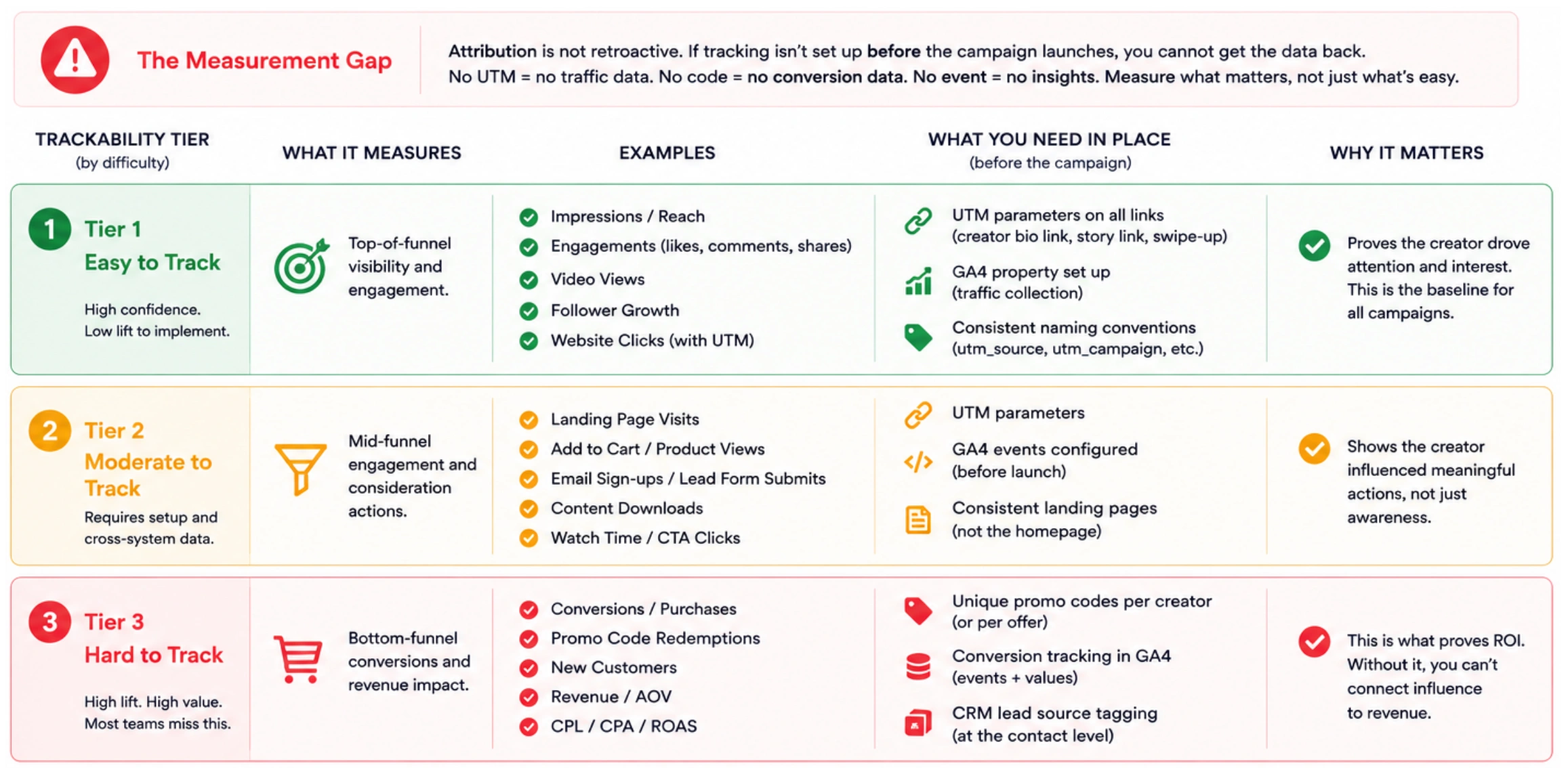
The framework in this guide — called The KPI Trackability Stack — organizes influencer marketing KPIs into three tiers based on how difficult they are to pull, not just where they sit in the funnel. The goal is to show exactly where tracking breaks down and what needs to be in place before a single creator brief is sent.
The KPI Trackability Stack
Three tiers by difficulty, not funnel stage:
Tier 1: Easy to track — no setup required
Tier 2: Trackable — but only if set up before the campaign launches
Tier 3: Highest business value — requires attribution infrastructure
2. Tier 1 — KPIs You Can Track Without Extra Setup
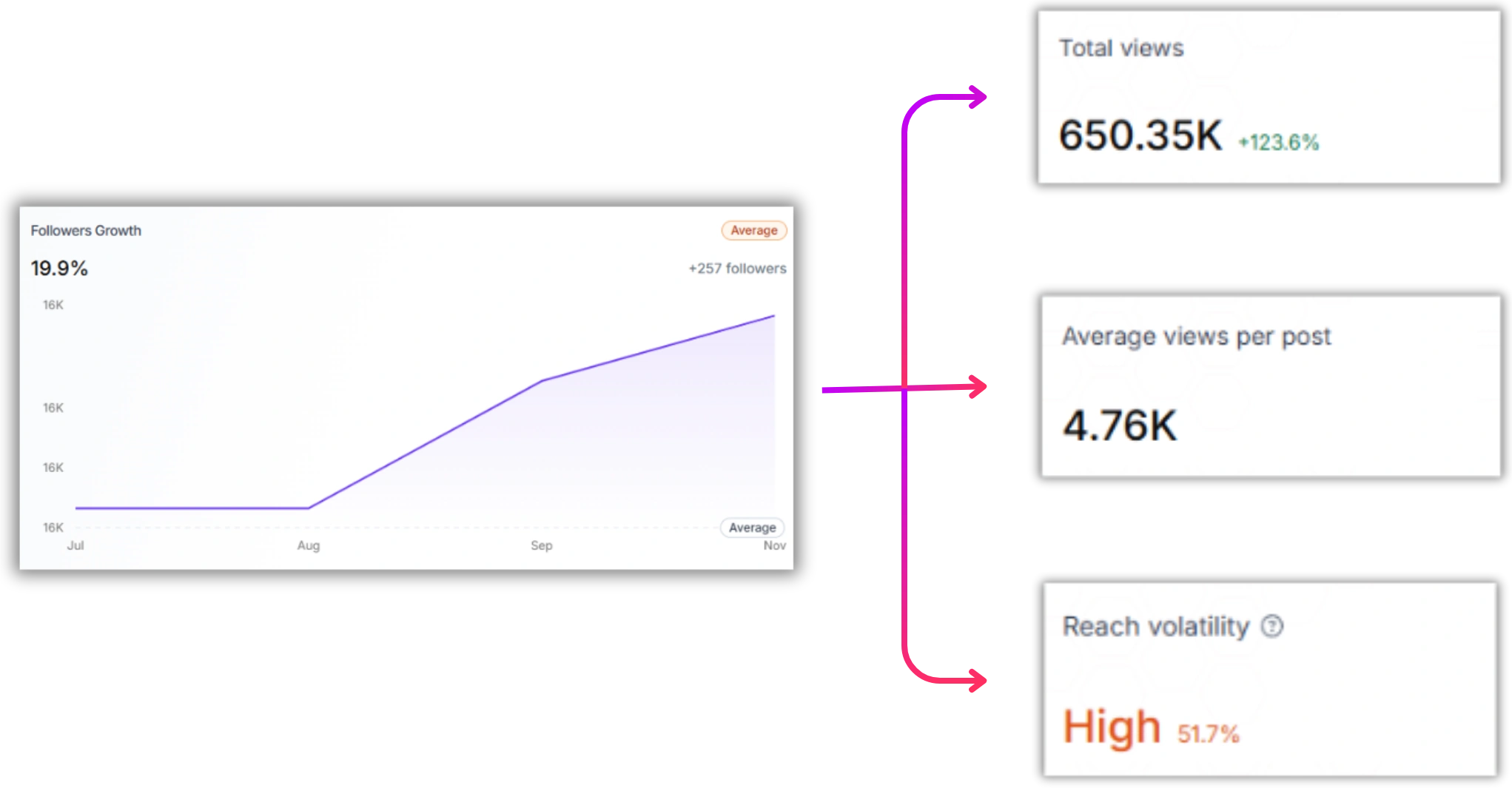
Tier 1 metrics come directly from platform analytics and creator dashboards. No UTMs, no codes, no GA4. If you can log into Instagram Insights or pull a Favikon creator profile, you have these numbers.
Reach and Impressions
Reach counts unique accounts that saw a post. Impressions count total views, including repeat views from the same account. Both are pulled from native analytics or from a platform like Favikon, which surfaces average reach across a creator's recent posts before you even run the campaign. That pre-campaign benchmark matters: it tells you whether the creator's typical reach aligns with your awareness goal, rather than discovering after the fact that their audience is 40 percent smaller than the follower count implied.
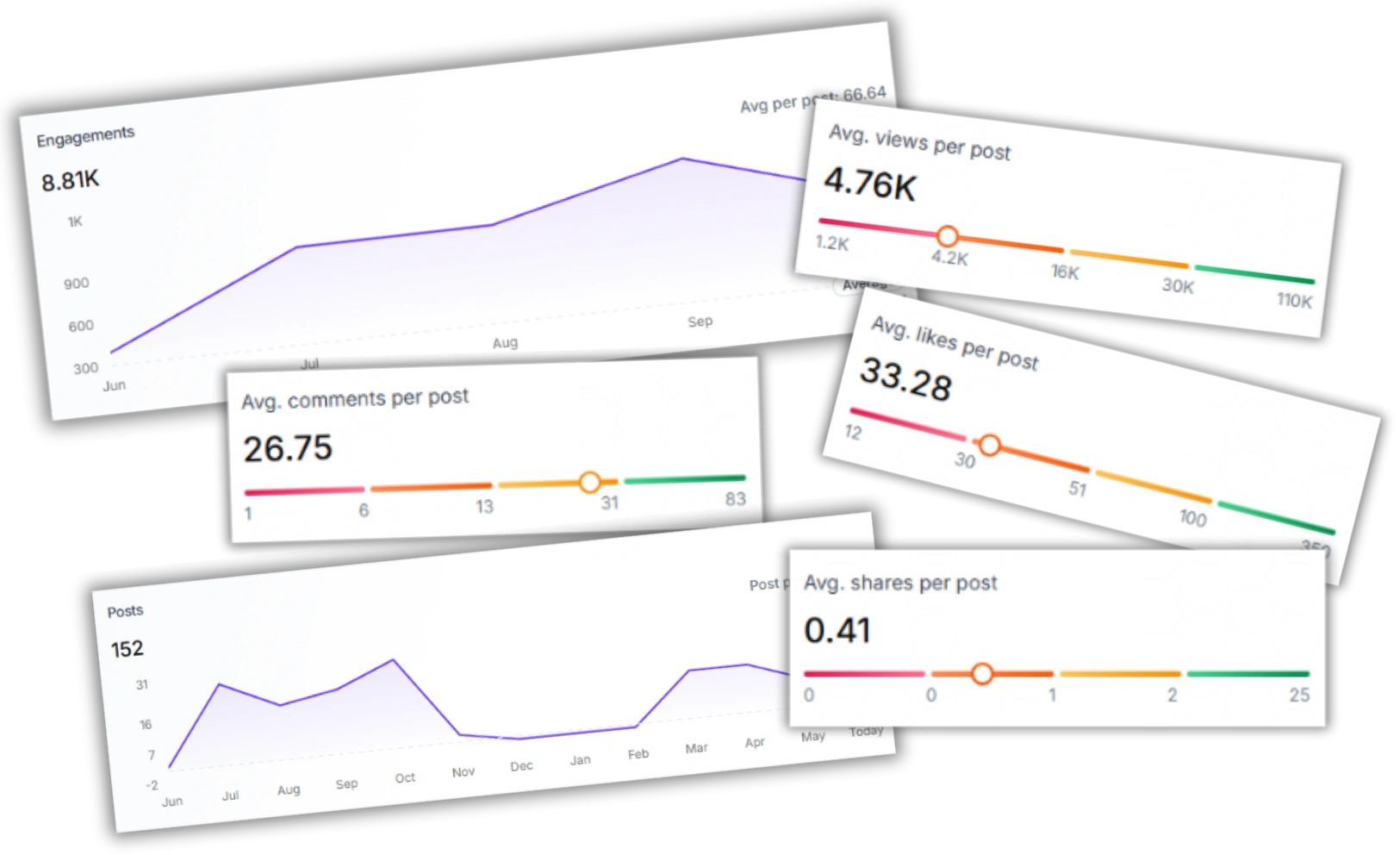
What they do not tell you: whether anyone who saw the post cared about it, clicked anything, or became a customer. Reach is a starting point, not a proof of impact.
Engagement Rate
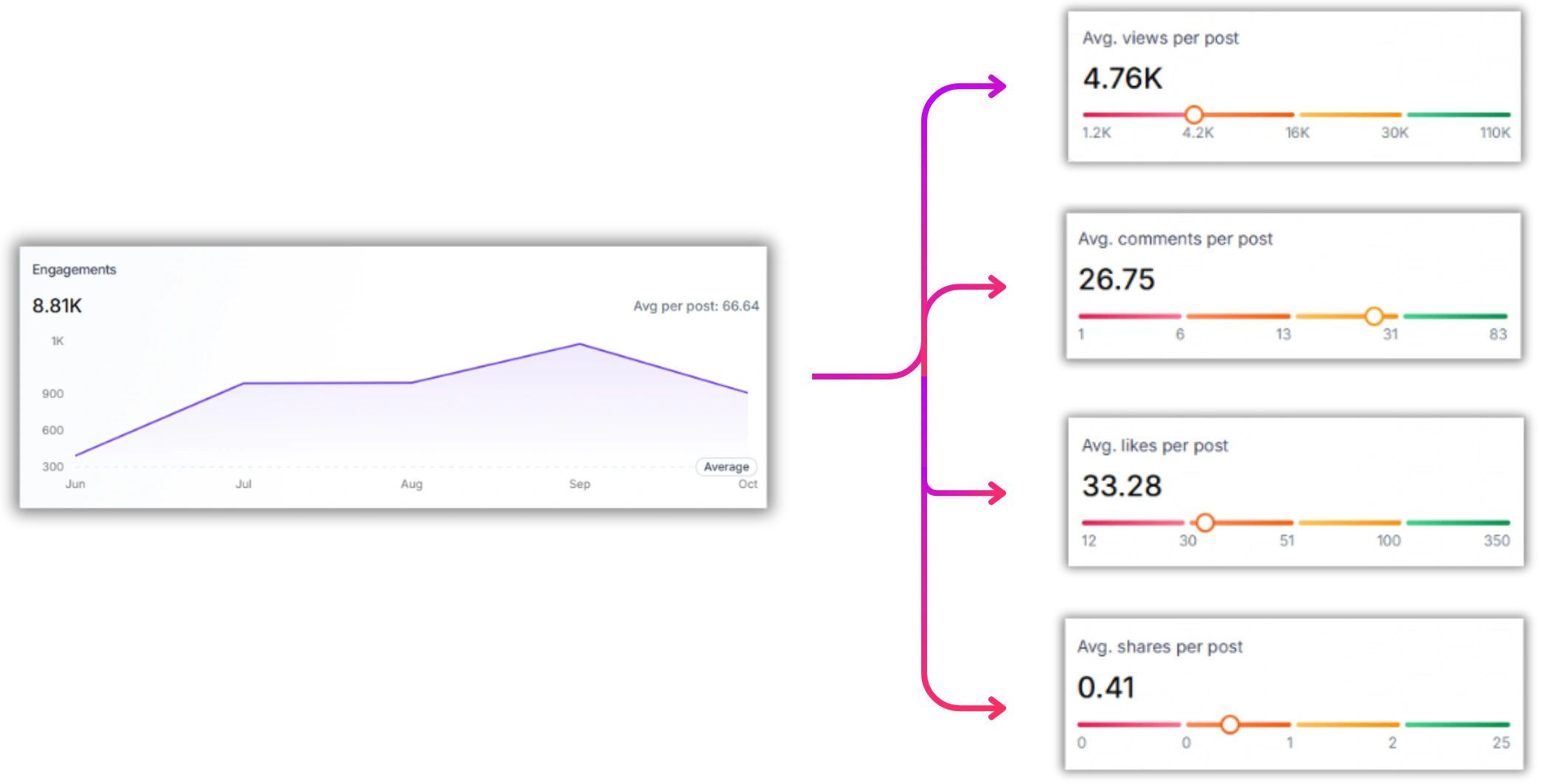
Engagement rate — typically calculated as total engagements divided by reach or followers — is the most commonly reported Tier 1 metric and the most commonly misread one. A creator with 200k followers and a 1.2 percent engagement rate on LinkedIn is actually performing well above average. A creator with 10k followers and 0.8 percent engagement on Instagram may be underperforming their niche. Context matters. Use the LinkedIn engagement rate benchmark to calibrate expectations before setting targets.
Follower Growth and Video Views
Track follower growth during and immediately after a campaign to measure audience pull — how many people cared enough about the creator's content to follow the brand or creator directly. Video views serve as a proxy for consumption, not just exposure: someone who watched 80 percent of a sixty-second product explainer is a warmer signal than someone who scrolled past a static image.
3. Tier 2 — KPIs That Require Setup Before the Campaign Starts
Tier 2 metrics are where most campaigns lose their measurement infrastructure. These KPIs require deliberate technical setup — UTM parameters, promo codes, GA4 events, affiliate links — and that setup must happen before the brief is sent to the creator. Not during the campaign. Not after.
This is the single most common failure point in influencer marketing operations: teams plan the content, plan the creator mix, plan the posting schedule, and then try to figure out tracking as an afterthought.
Click-Through Rate (CTR) and Website Traffic
CTR measures how many viewers clicked through to a destination after seeing a creator's post. Without a UTM-tagged link in the creator's bio or caption, website traffic from the campaign is indistinguishable from organic traffic in GA4. It simply shows up as direct or unattributed.
Setup checklist before briefing the creator:
• UTM parameters: build a unique URL for each creator using campaign, source, and medium parameters so GA4 can segment traffic by creator.
• Link placement: confirm where the link will live — bio, Stories link sticker, caption — and whether the platform allows it.
• GA4 event: configure a session source/medium report in GA4 so you can pull creator-attributed sessions without manual filtering after the fact.
Conversion Rate, Cost Per Lead (CPL), and Cost Per Engagement (CPE)
Conversion rate measures the percentage of creator-driven visitors who completed a target action: form fill, trial sign-up, purchase. CPL divides total campaign spend by the number of leads generated. CPE divides spend by total engagements. All three require either UTM tracking or promo codes to attribute actions back to the influencer.
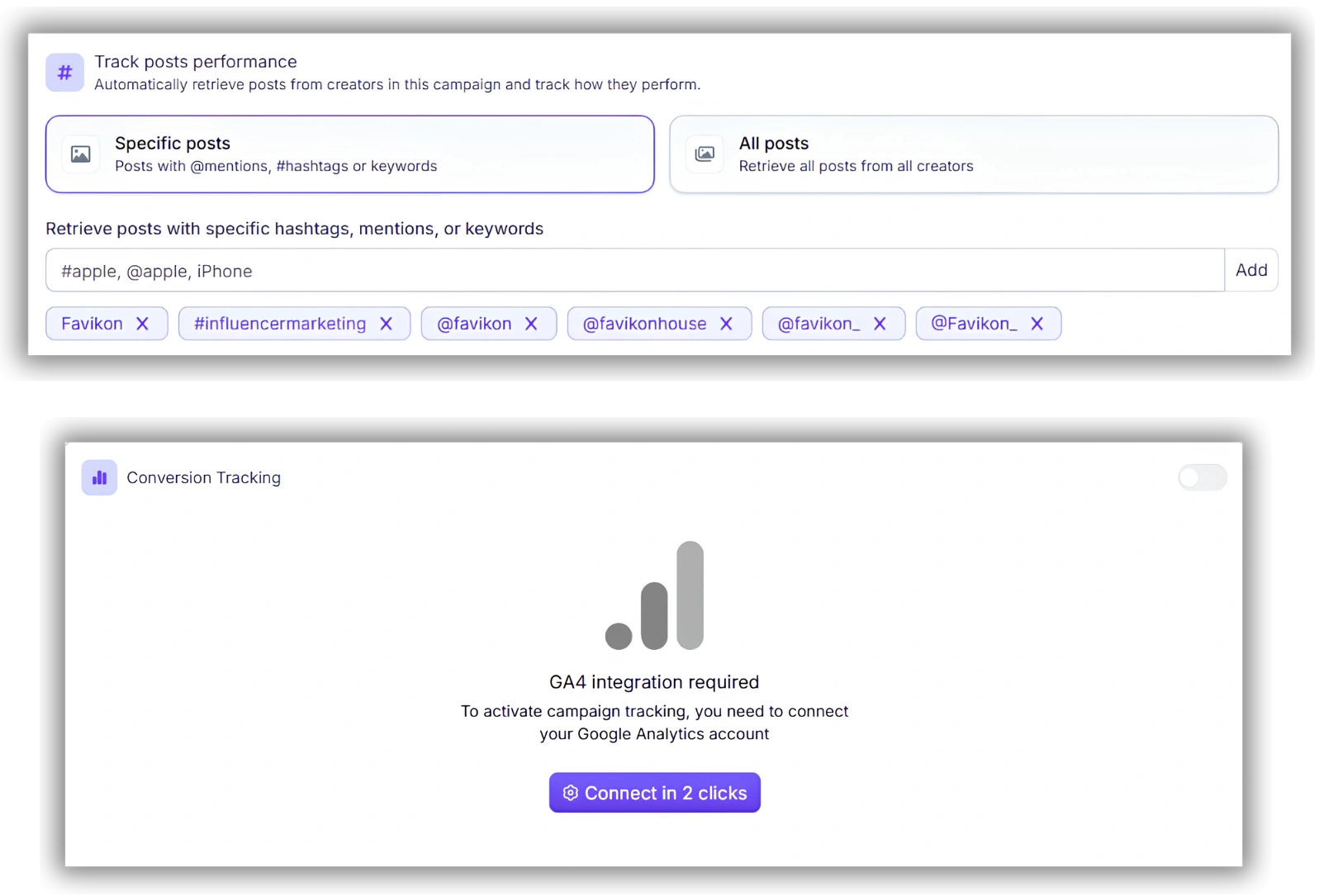
Promo codes work particularly well for e-commerce and SaaS trials where a creator's audience is given an exclusive discount or extended trial. They are easier for audiences to use than bio links, and they create a clean attribution path even when UTM parameters are unavailable. Favikon's campaign management feature connects to GA4 so that Tier 2 KPIs can be tracked automatically once the integration is in place — see influencer campaign management for setup details.
Track Tier 2 KPIs automatically. Favikon connects to GA4 so website traffic, CTR, and conversion events are attributed back to each creator without manual UTM management.
4. Tier 3 — The KPIs That Move Budgets (And Why Most Teams Skip Them)
Tier 3 metrics are the ones that answer the CFO's question. They connect influencer activity to business outcomes — pipeline generated, revenue influenced, brand equity built. They are also the hardest to set up, which is why most teams never measure them — and why most influencer marketing budgets stall or get cut at renewal time.
Pipeline Influence
Pipeline influence tracks how many deals in your CRM were touched by influencer content at some point in the buyer journey. A prospect who watched a LinkedIn creator's post about your product, then signed up for a trial two weeks later, then converted — that deal was influenced. Without CRM tagging and UTM data connected to lead source, it is invisible.
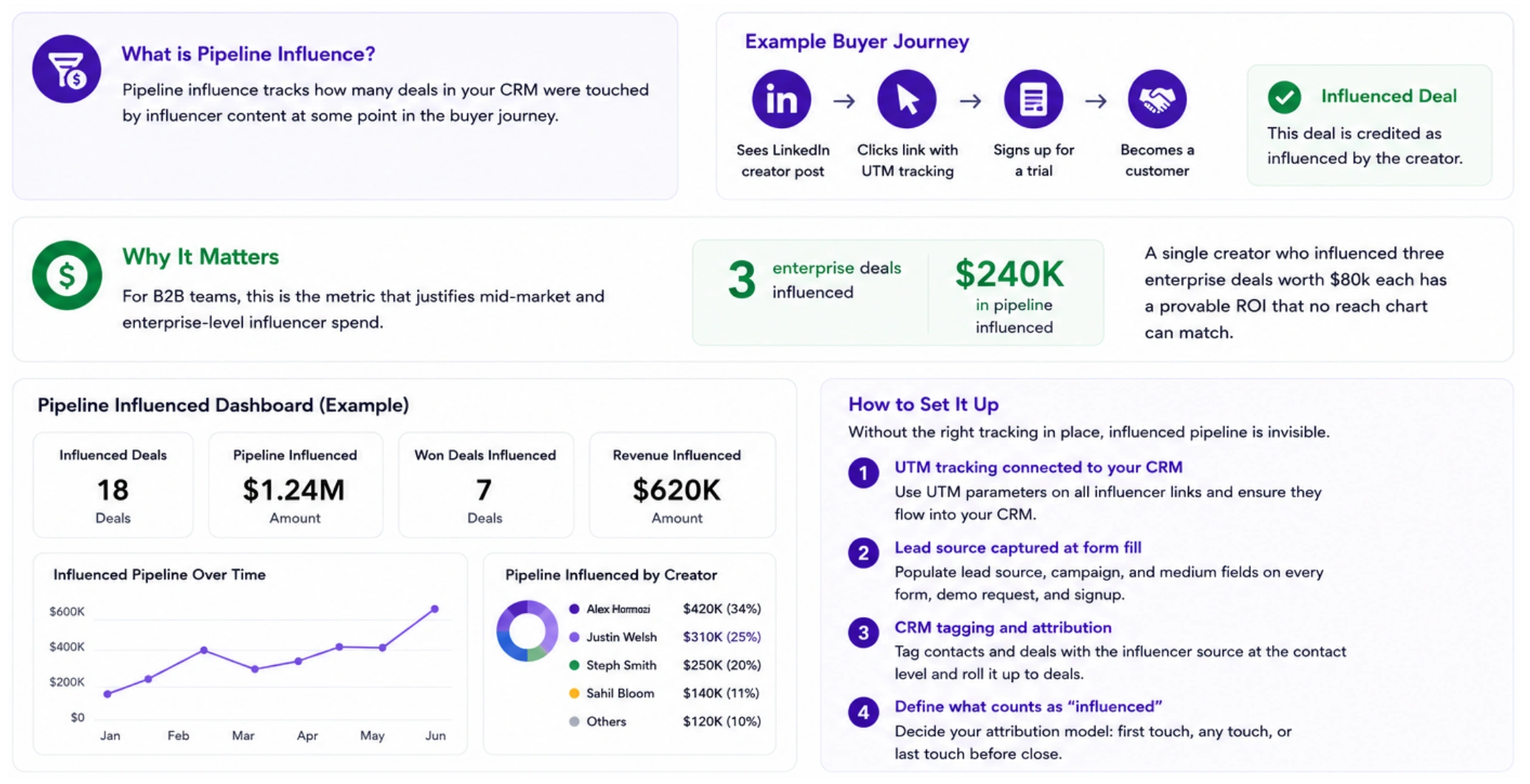
For B2B teams, this is the metric that justifies mid-market and enterprise-level influencer spend. A single creator who influenced three enterprise deals worth $80k each has a provable ROI that no reach chart can match. Setting it up requires: UTM tracking connected to your CRM, lead source fields populated at form fill, and a clear definition of what counts as an influenced deal (first touch? any touch? last touch before close?).
Earned Media Value (EMV)
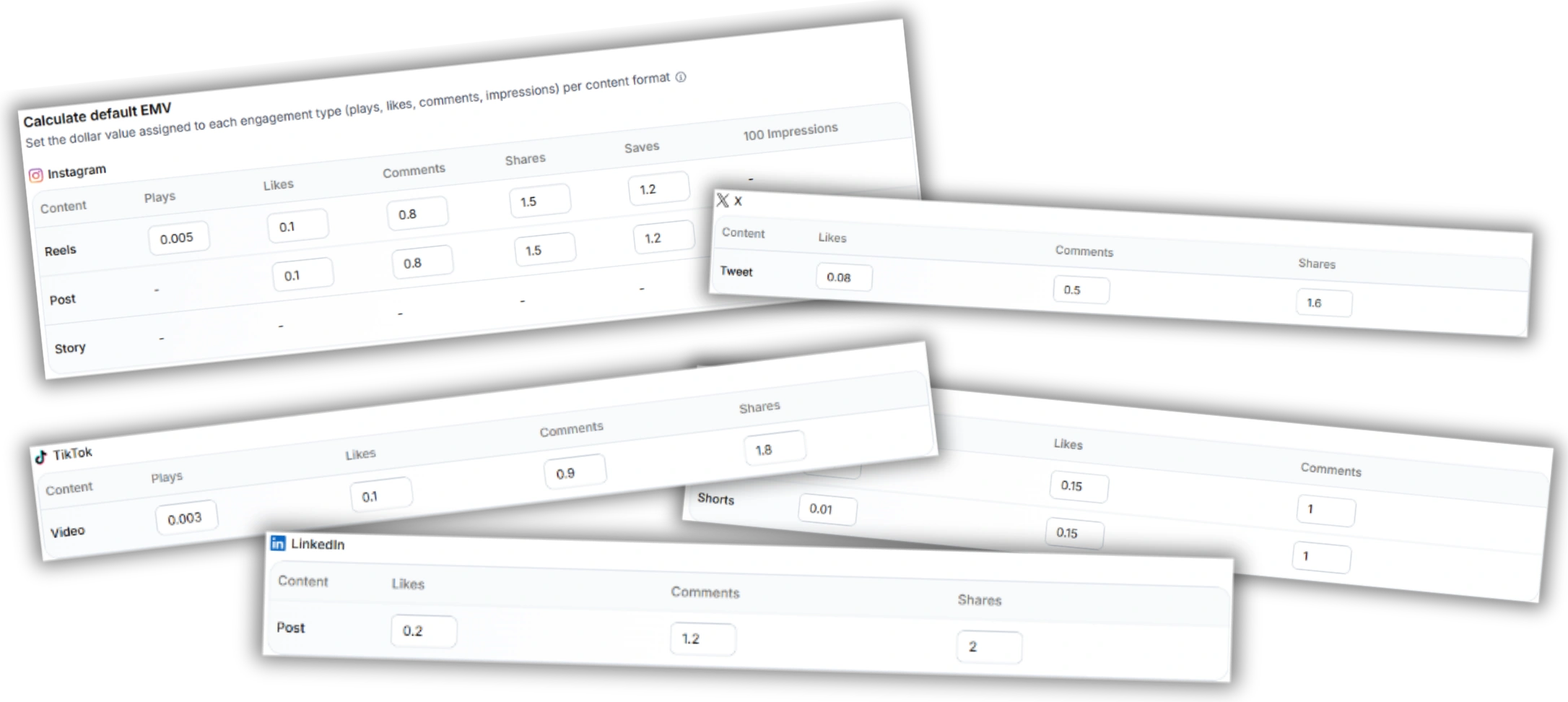
EMV estimates the equivalent paid media cost of the organic exposure a creator delivered. It is an imperfect metric — it does not measure intent or conversion — but it gives finance teams a number they can benchmark against paid social CPMs. Use Favikon's LinkedIn EMV calculator to generate EMV estimates at the creator or campaign level. Treat EMV as a directional signal, not a hard ROI number.
Branded Search Lift
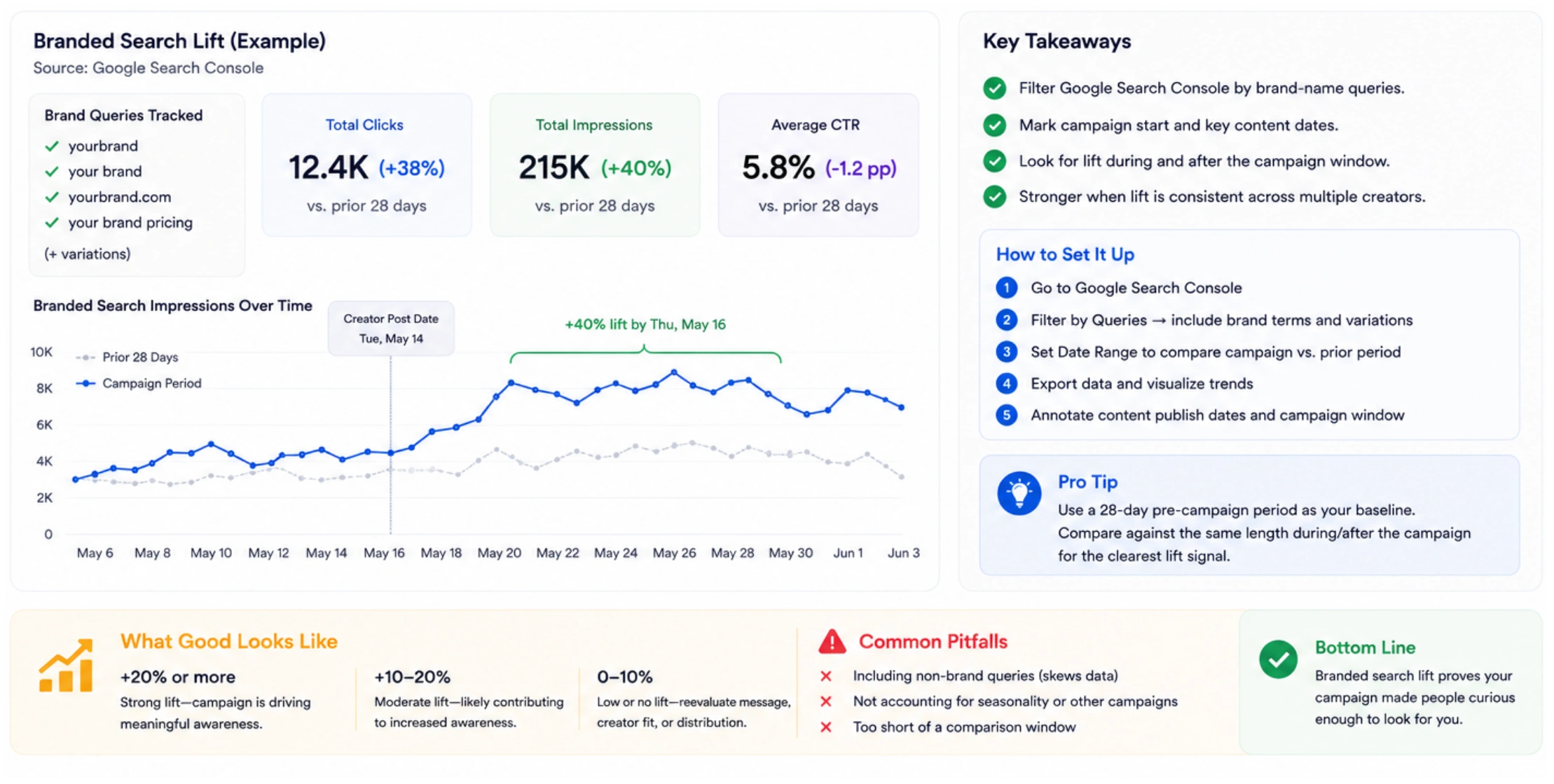
Branded search lift measures the increase in Google searches for your brand name during and after a creator campaign. If a creator publishes a post on Tuesday and branded search volume spikes 40 percent by Thursday, the correlation is meaningful — especially if it repeats across multiple creators. Track it via Google Search Console, filtered to brand-name queries, with campaign dates marked. This metric is particularly valuable for awareness campaigns where conversion tracking is not the primary goal.
Cost Per Opportunity (CPO)
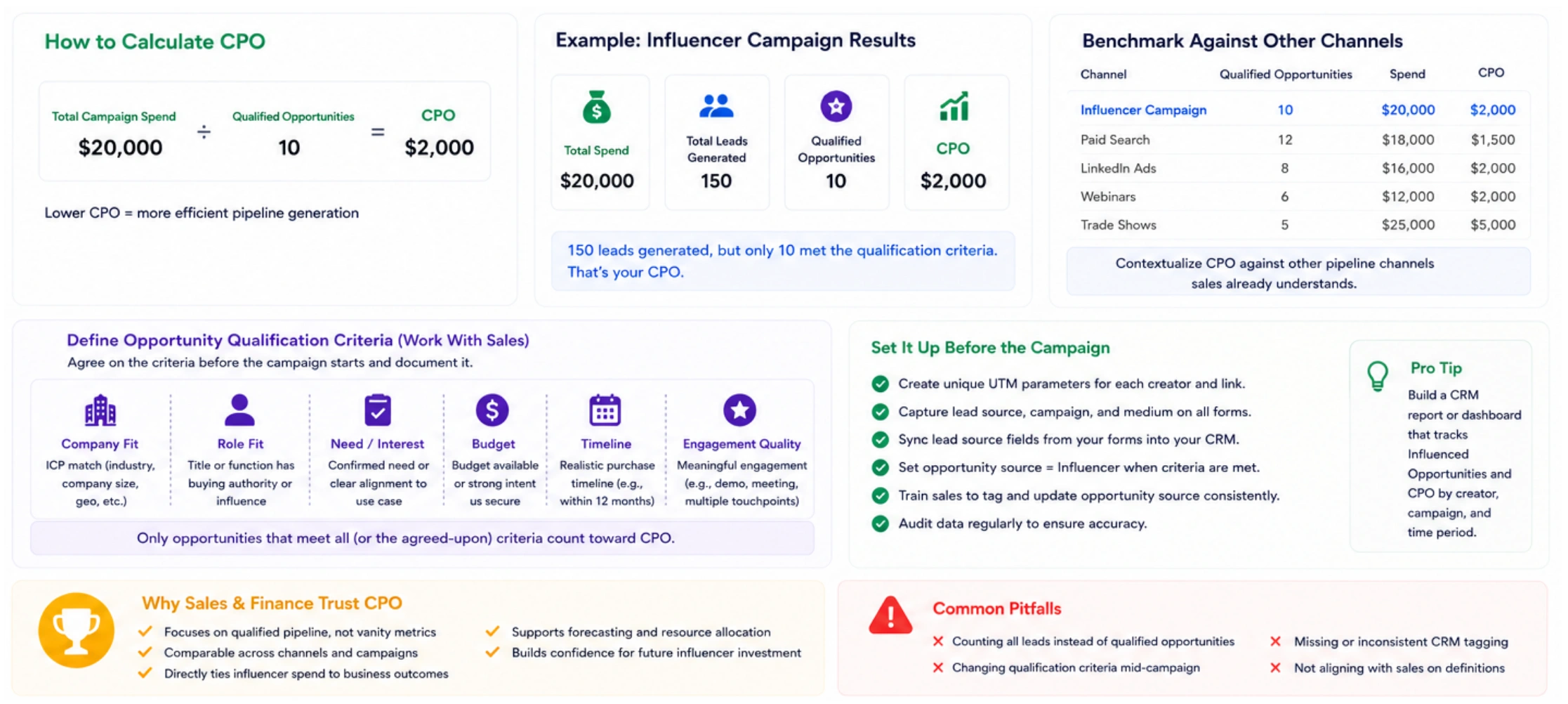
CPO is the B2B version of CPL. Instead of counting all leads generated, it counts only leads that became qualified sales opportunities. Total campaign spend divided by qualified opportunities gives a number that sales leadership can contextualize against other pipeline-generating channels. Set this up before the campaign by defining the opportunity qualification criteria with your sales team — otherwise the data will be disputed after the fact.
Why Tier 3 gets skipped: the setup requires cross-functional coordination — marketing, sales, analytics, sometimes finance. Most influencer campaigns are planned and executed by a single team without that coordination. The result: great content, unproven ROI, budget cut at the next planning cycle.
5. How to Match KPIs to Campaign Goals
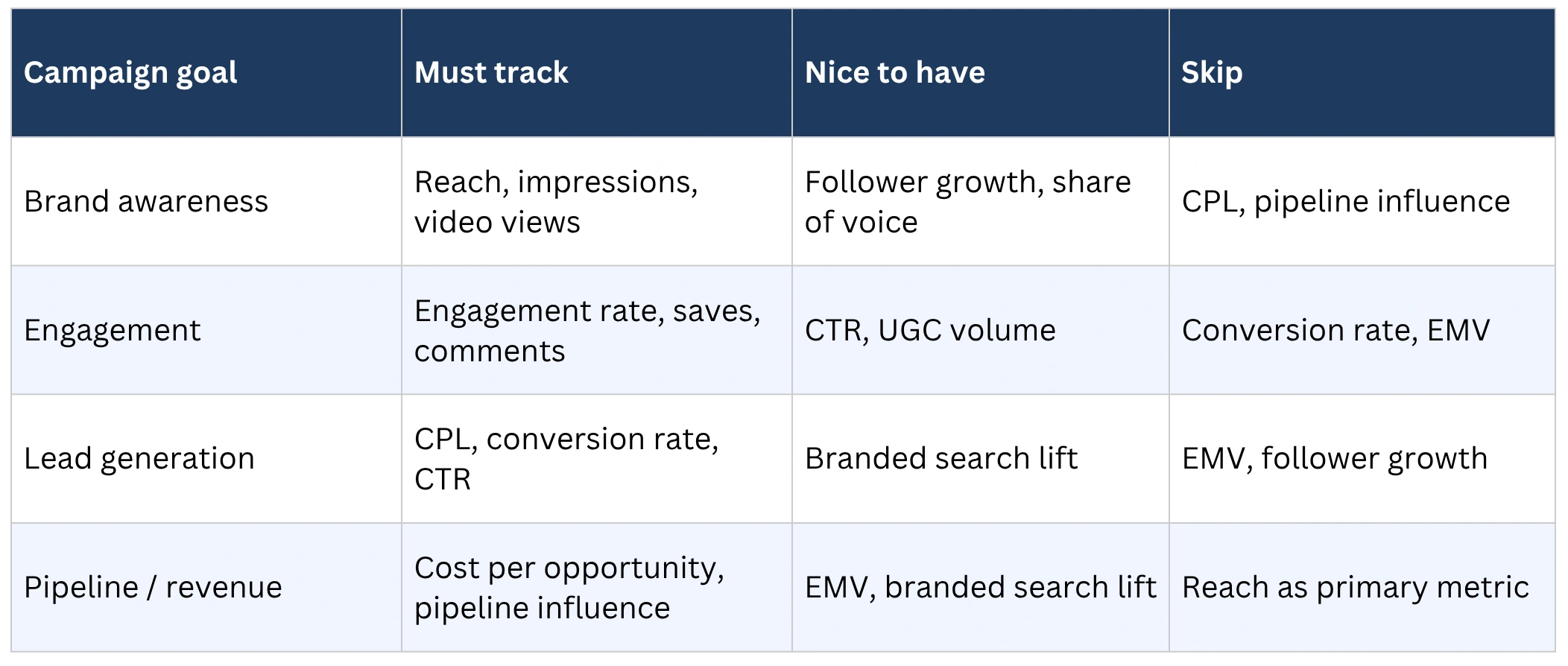
Not every campaign needs all three tiers. The decision about which KPIs to track should be made at the brief stage, based on the campaign's primary goal. Tracking fifteen metrics for a brand awareness play does not make the campaign more accountable — it creates noise that obscures the signal.
For a deeper breakdown of how to calculate and benchmark these metrics across campaigns, see how to measure influencer marketing and influencer marketing ROI.
6. Setting Up KPI Tracking in Favikon
Favikon surfaces Tier 1 data natively on every creator profile — average reach, engagement rate, growth trend, video view count — so you can set pre-campaign benchmarks before the brief goes out. That pre-campaign snapshot is important: it gives you a baseline to measure against, not just absolute numbers pulled post-campaign.
For Tier 2 and Tier 3 tracking:
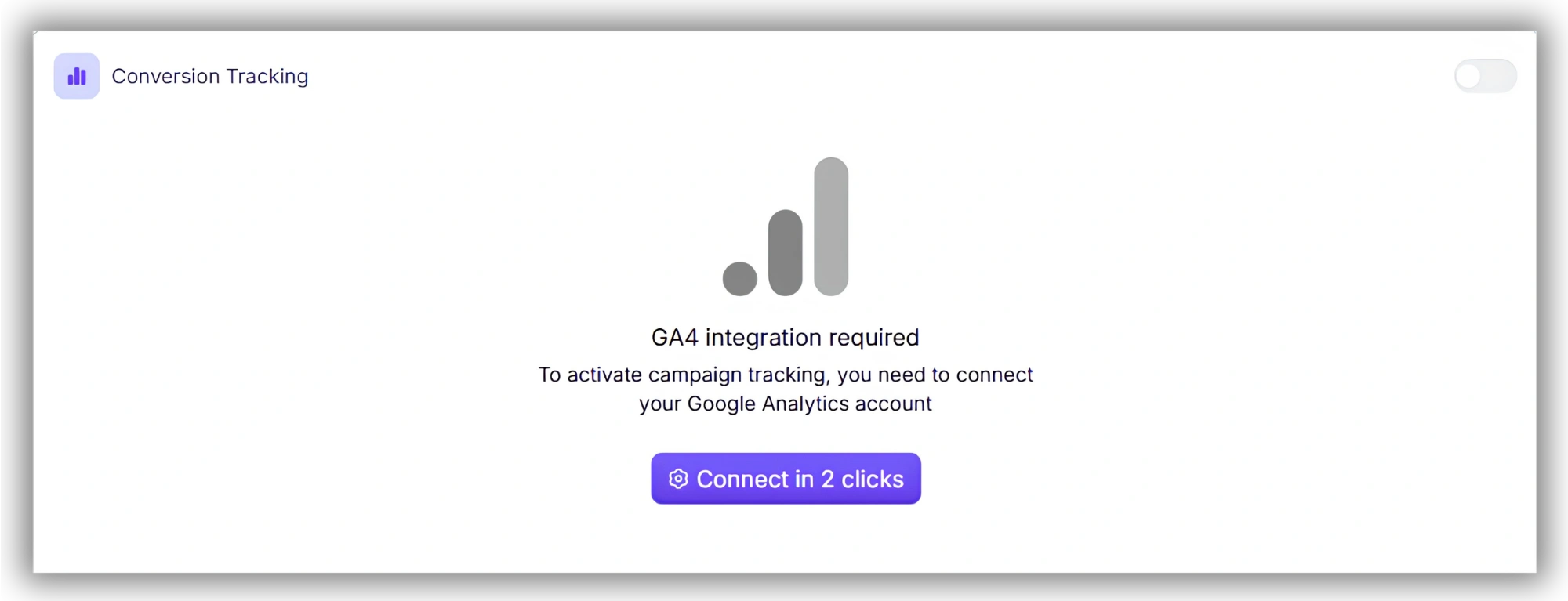
1. Connect GA4 via the Favikon campaign management integration. Once connected, traffic and conversion events from UTM-tagged creator links flow directly into campaign reporting without manual export.
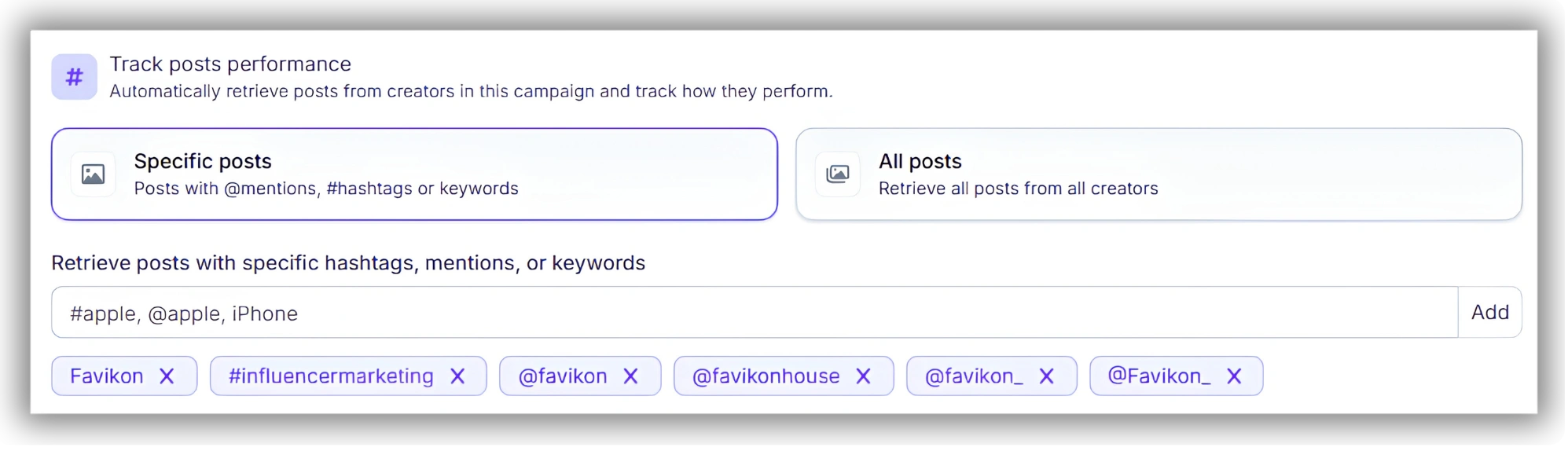
2. Tag campaign posts in Favikon as they go live. This lets you track longitudinal performance — how engagement and reach evolve across a creator's posts over the campaign period — rather than a single-post snapshot.
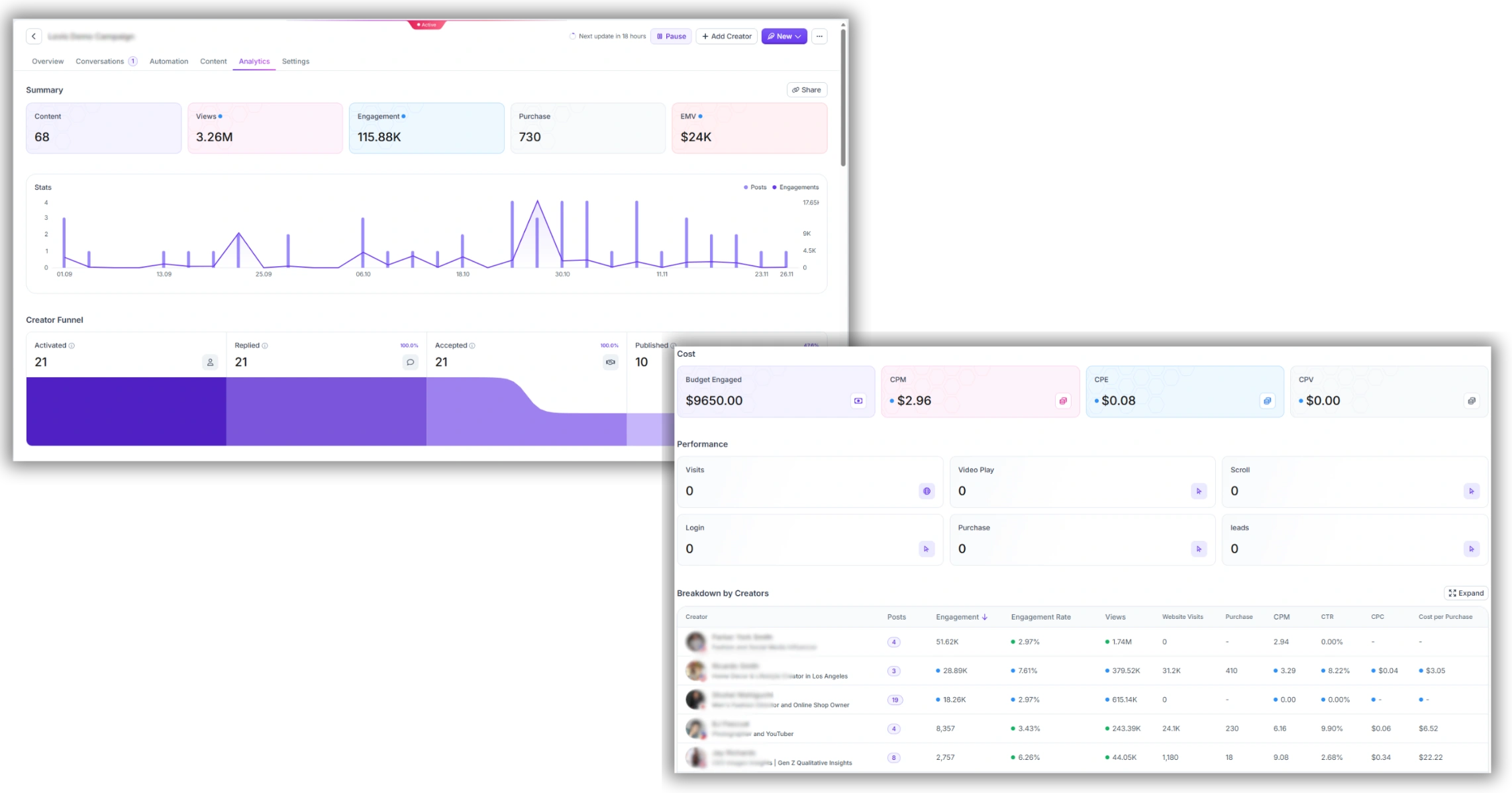
3. Use influencer marketing reports to generate shareable campaign summaries that combine Tier 1 platform data with Tier 2 attribution data. These are the outputs that get presented to leadership and that should be structured around the KPIs defined at the brief stage, not built retrospectively.
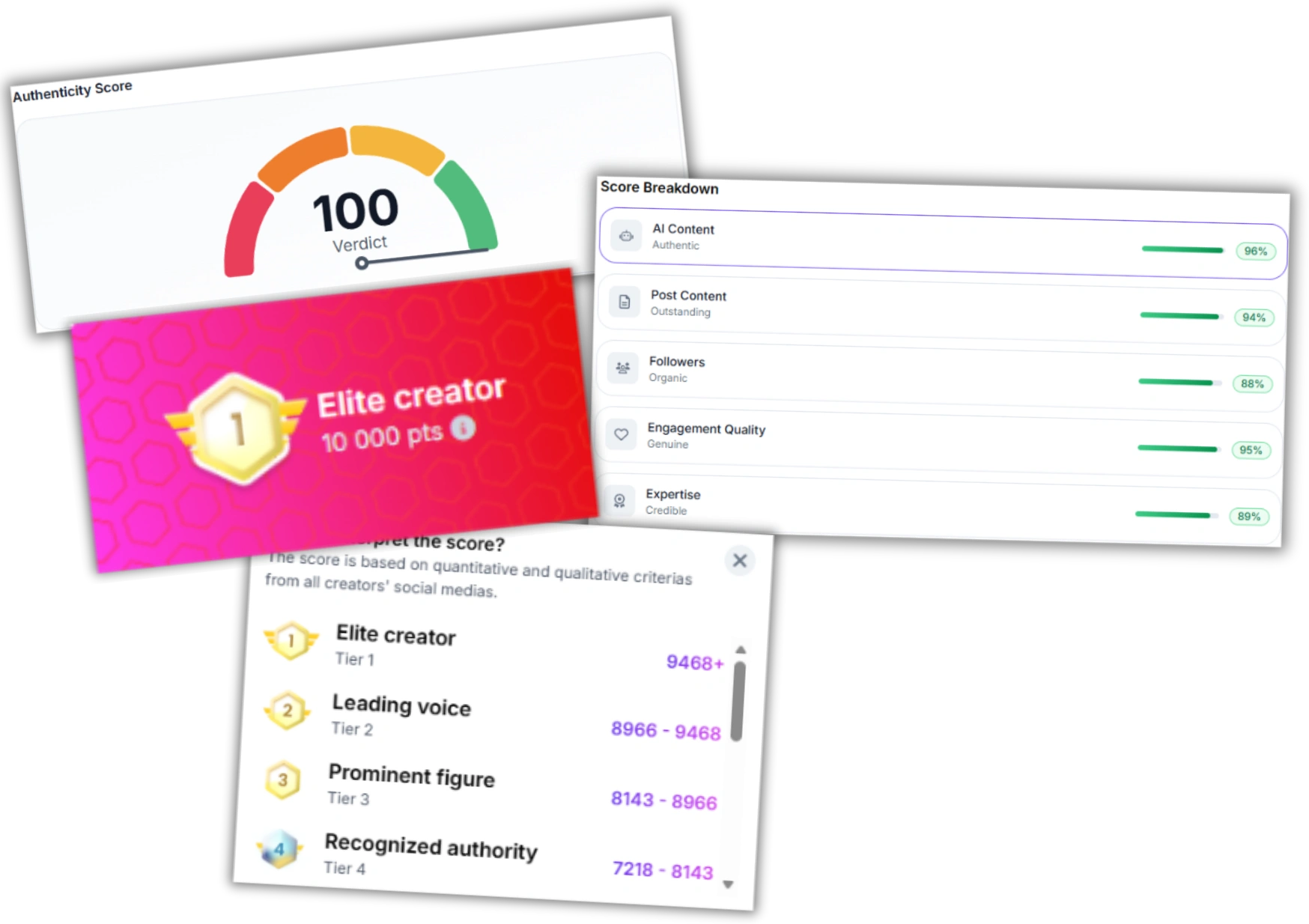
4. Use the Authority Score and Authenticity metrics on each creator profile to set realistic performance benchmarks before the campaign starts. A creator with an Authority Score of 72 and strong engagement consistency will deliver more predictable Tier 1 results than a creator with a high follower count and irregular posting history.
FAQ
What are the most important KPIs for influencer marketing?
It depends on the campaign goal. For awareness campaigns, reach, impressions, and video views are primary. For lead generation, CPL and conversion rate matter most. For B2B pipeline campaigns, cost per opportunity and pipeline influence are the metrics that justify budget. The mistake most teams make is treating engagement rate as a universal proxy for performance — it is not.
What KPIs should I set for an influencer marketing campaign?
Set KPIs at three levels before the campaign launches: one Tier 1 metric (reach or engagement rate as a baseline), one Tier 2 metric if conversion or traffic is a goal (CTR or CPL), and one Tier 3 metric if you need to prove business impact (pipeline influence or cost per opportunity). Setting all three forces the setup conversation — UTMs, promo codes, CRM tagging — before the brief goes out.
How do I track influencer marketing KPIs?
Tier 1 KPIs come directly from platform analytics and tools like Favikon. Tier 2 KPIs require UTM parameters on every creator link, promo codes for conversion tracking, and GA4 configured to capture campaign traffic by creator. Tier 3 KPIs require CRM integration, lead source tracking, and Google Search Console for branded search data. The tracking infrastructure for Tier 2 and Tier 3 must be built before the creator brief is sent — it cannot be added after the campaign ends. See influencer campaign management for Favikon's GA4 integration.
What is a good engagement rate for an influencer campaign?
Benchmarks vary by platform, audience size, and content format. On LinkedIn, 2 to 5 percent is strong for most creator tiers. On Instagram, 1 to 3 percent is typical for mid-tier creators, with micro-creators often achieving 4 to 8 percent. Use Favikon's LinkedIn engagement rate benchmark to calibrate against niche-specific averages rather than platform-wide numbers, which are often skewed by viral outliers.
Also See 👀
➡️ HOW TO MEASURE INFLUENCER MARKETING ROI
➡️ HOW TO SEARCH FOR ANY POSTS ON LINKEDIN
➡️ FAVIKON INFLUENCER DATABASE — 10M+ PROFILES
Others articles