Influencer Marketing for Apps: 4 Real Case Studies (With the CPM/RPM Math)
App companies use influencer marketing to drive installs, increase user engagement, and improve campaign performance. This guide reviews four real case studies and explains the CPM and RPM calculations behind their results.

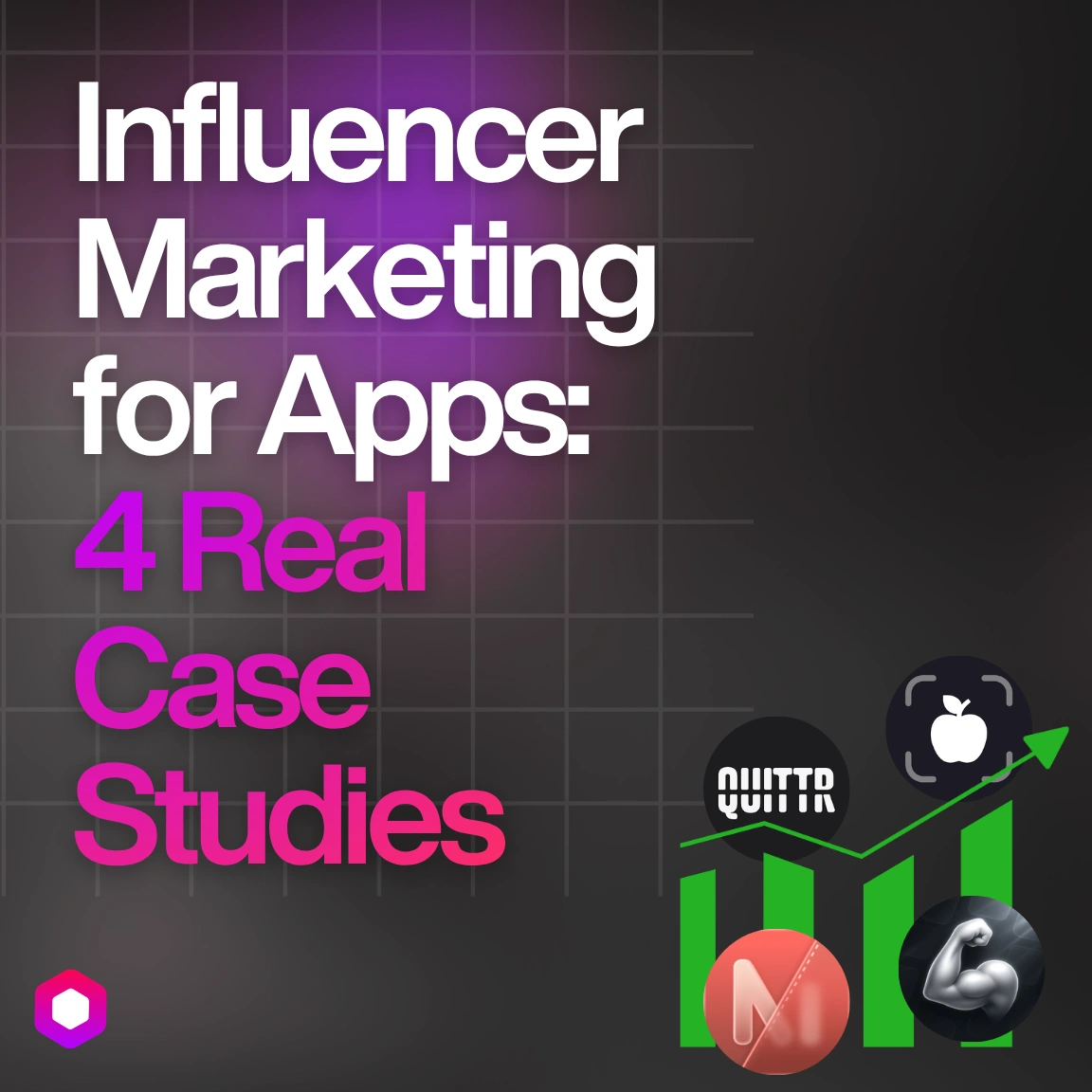
Influencer Marketing for Apps: 4 Real Case Studies (With the CPM/RPM Math)
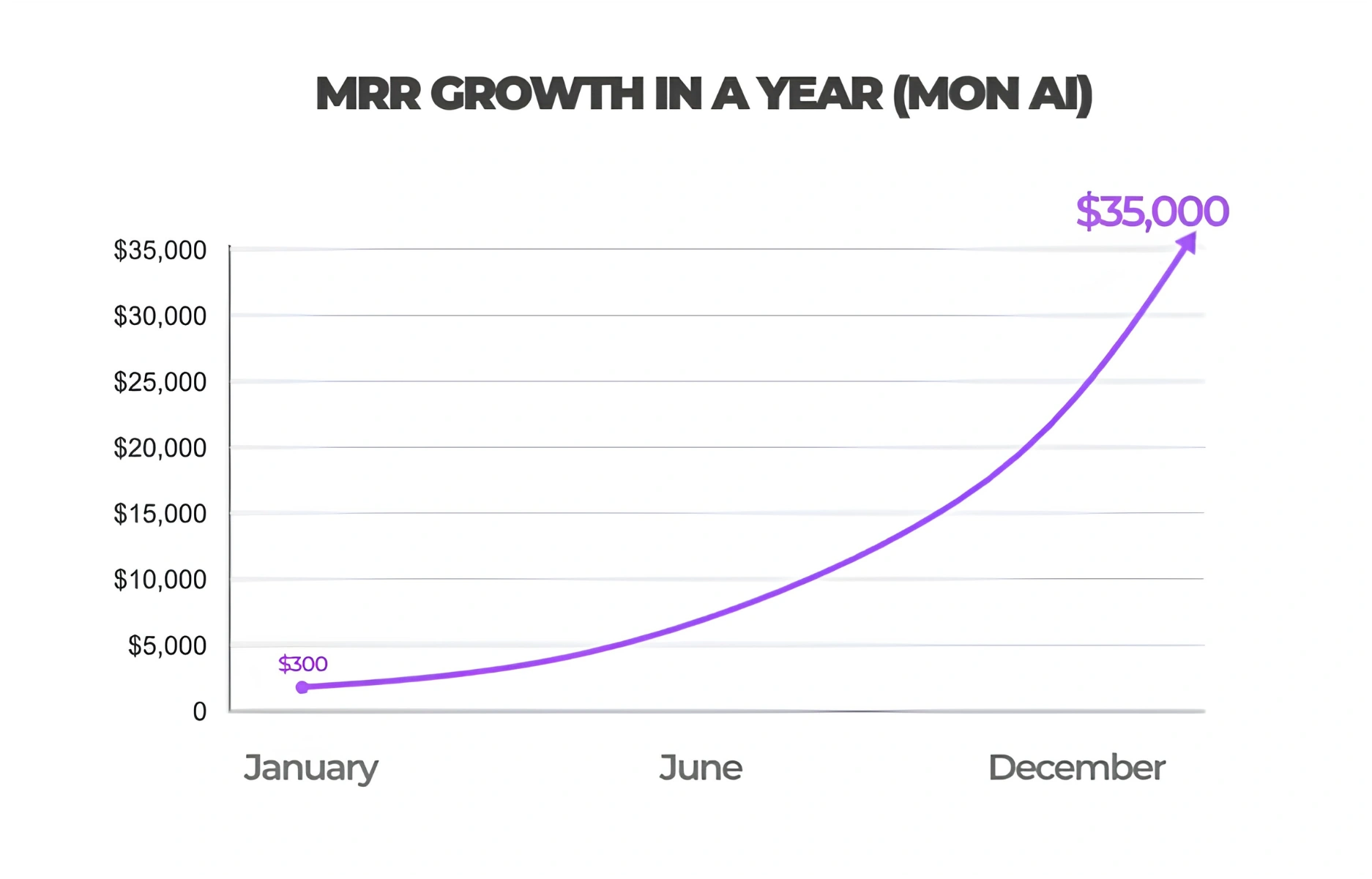
$300 a day to $14,000 a month. A launch that hit $35,000 in its first real push. A campaign that scaled past $500,000. And a playbook currently running at $3 million a month. All four came from the same core strategy: influencer marketing built on one piece of math most app marketers skip — pay a creator less than what their placement is actually worth to you, and the gap is your profit. If you're still pricing out what a deal like this should even cost, start with how much it costs to hire an influencer.
This isn't another generic list of "partner with influencers who fit your brand" advice. It's four real, named case studies — with real deal structures and real numbers — showing how that math played out differently for four different apps. Start with the formula in Section 1, since every case study below is really just that formula applied under different constraints.
1. The CPM/RPM Math Behind a Profitable Influencer Deal
Most app marketers price influencer deals the way they'd price a display ad: negotiate the lowest CPM you can get, then hope it converts. The founders in this strategy do the opposite — they start from what a view is actually worth to them (RPM), then work backward to a CPM they're willing to pay.
RPM (revenue per mille) is what 1,000 views of your app's install funnel are worth in revenue, once you know your install rate and average revenue per user. CPM (cost per mille) is what you're paying the creator for those same 1,000 views. Keep CPM below RPM and every view is profitable on its own — you don't need the post to go viral to make money, you just need the math to hold.
The worked example
In the source video, this is framed with a real range: an RPM around $2–3, targeting a CPM of roughly $1–1.50. That's a built-in margin before a single install happens — if the RPM assumption holds, every 1,000 views clears $0.50–$1.50 in pure profit before accounting for anything the post does beyond the guaranteed minimum.
• Target RPM: ~$2–3 per 1,000 views
• Target CPM (what you pay the creator): ~$1–1.50 per 1,000 views
• Built-in margin: the gap between the two, locked in before the post even goes live
If you want to sanity-check where your own numbers land, you can calculate a fair influencer rate before you start negotiating.
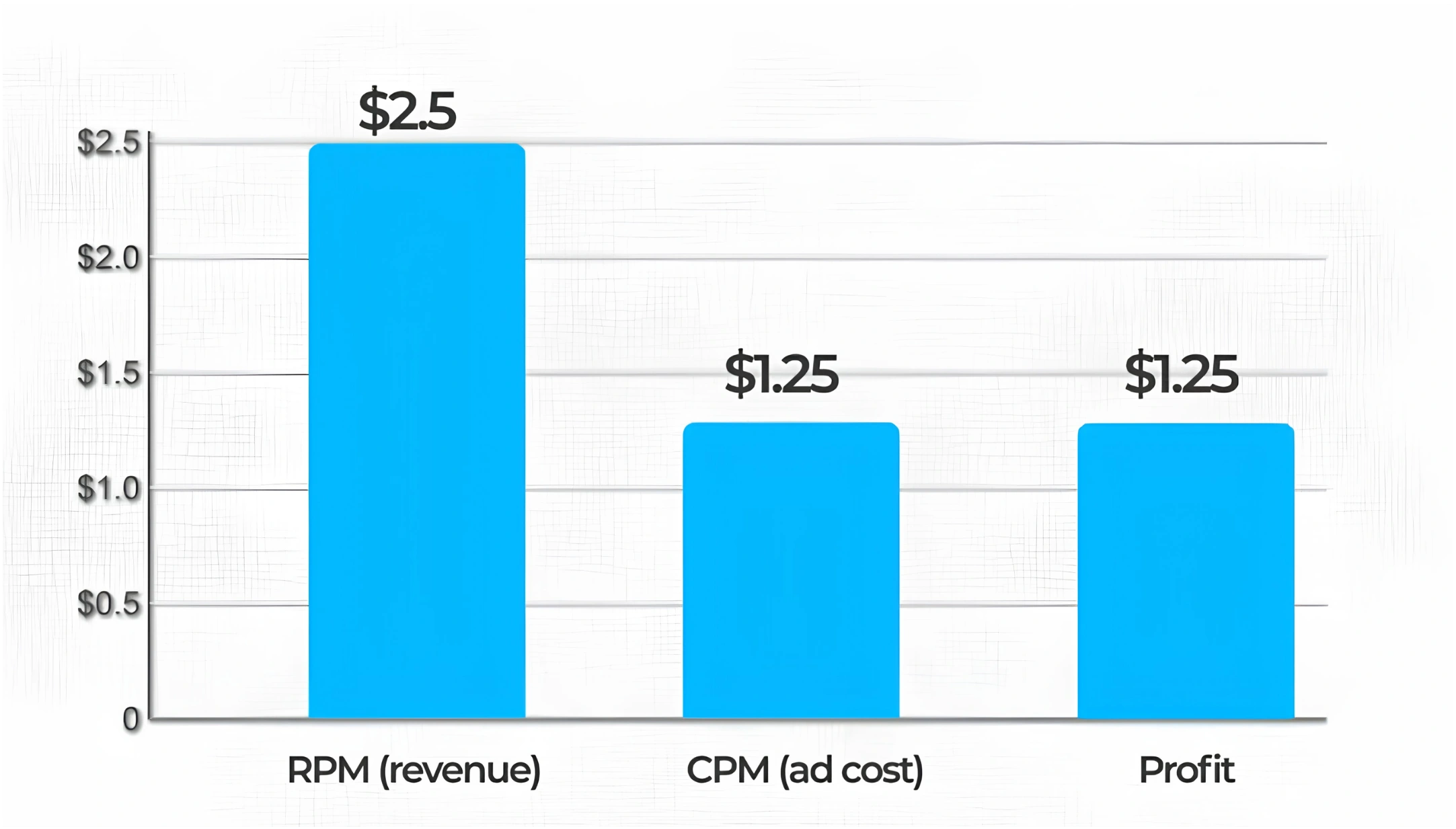
This is the mechanism every case study below refers back to — each founder found a different way to hit a CPM under their RPM, whether through deal structure, geography, or scale.
For the full formula, worked example, and platform benchmark ranges, see our What Is CPM in Influencer Marketing guide.
Learn more in this video:
2. Case Study: $300/Day to $14K/Month With One Video
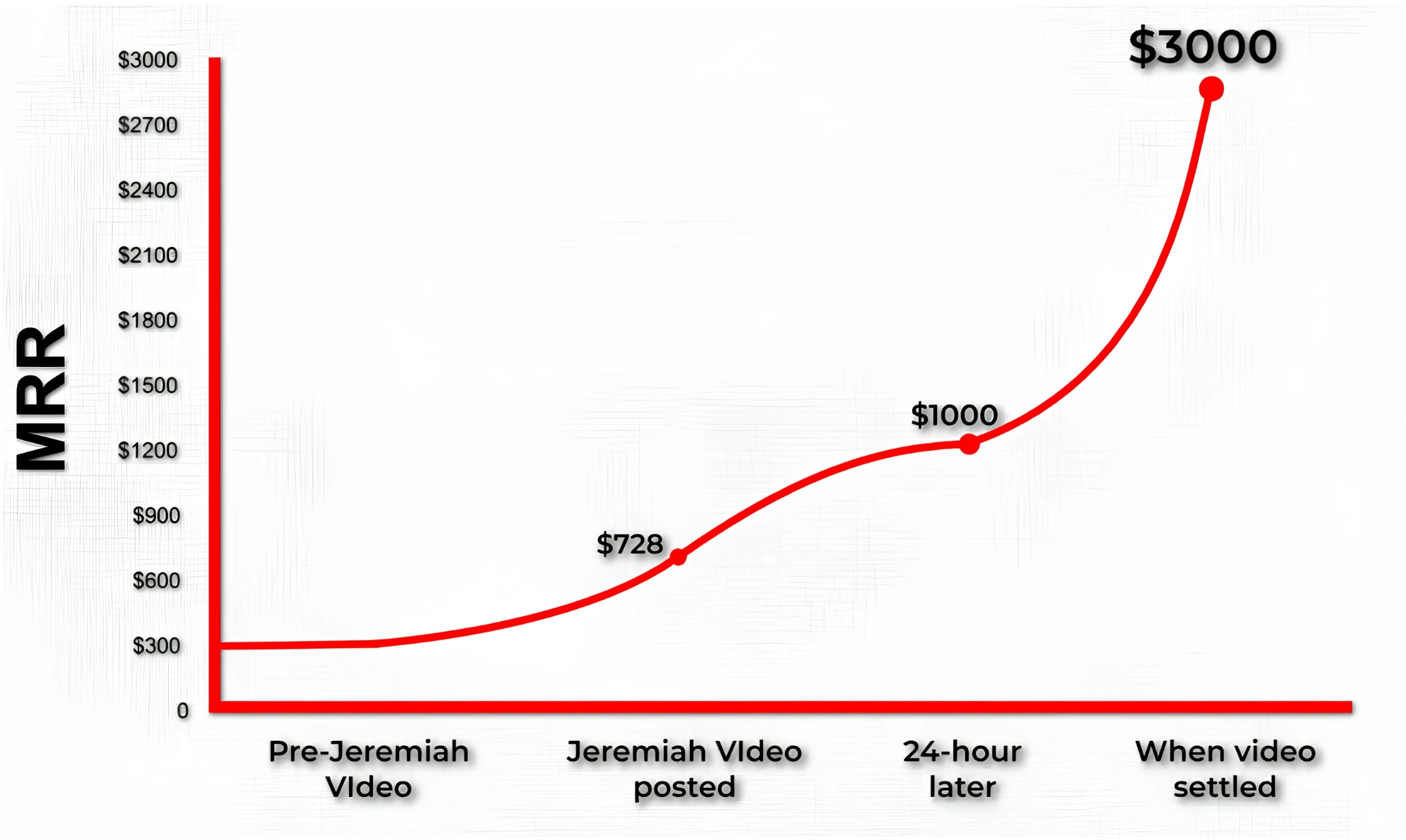
This case study starts small: a $300/day ad spend baseline, scaled to $14,000/month off the back of one influencer video from a creator named Evan, for an app referred to as Lock.
Three-part creator vetting
Before the deal, the founder screened the creator on three things, in order:
• Engagement quality — not follower count, but whether the audience actually interacts with the content
• Content fit — whether the creator's existing content style matches how the app would need to be shown
• Organic fit — whether the app would feel native in the creator's feed, rather than like an obvious ad drop-in
The deal structure: a minimum view clause
Rather than a flat fee with no downside protection, the deal included a minimum view clause — a guaranteed view threshold the creator commits to, which is what makes the CPM-under-RPM math in Section 1 enforceable rather than aspirational. If the post underperforms the clause, the economics of the deal are protected. For more on structuring terms like this, see how to negotiate fair rates with influencers.
3. Case Study: Going International to Cut Cost and Competition
For an app referred to as MonAI, the founder (Flo) found their CPM-under-RPM math by changing where they looked for creators, not just how they structured the deal.
Profit-share plus retainer
The deal combined a retainer (a fixed baseline payment) with a profit-share component tied to performance — giving the creator upside if the campaign outperformed, while keeping the founder's downside capped.
Why a Colombian creator beat US options
The founder chose a creator based in Colombia over comparable US-based options for two reasons that both feed directly back into the Section 1 math: lower cost per deal, and less competition from other brands bidding for the same creator's attention. Both push CPM down without touching audience quality — the same lever as the vetting process in Case Study 1, applied through geography instead of deal terms.
4. Case Study: Pairing Organic Content With Paid Ads
For an app referred to as Quitter, the founder (Zach) used influencer content not just as a standalone channel, but as a creative testing ground for paid ads — reportedly scaling the approach past $500,000.

The sequence
• Run influencer content organically first, across multiple creators
• Watch which specific posts and hooks actually convert, using real audience data instead of guessing at creative
• Take the winning organic creative and put paid ad budget behind it
The advantage of this sequence is that it removes the guesswork from paid creative. Instead of testing ad variations blind, the founder let the organic influencer phase do the testing — the paid spend only ever went behind creative that had already proven it converts.
5. Case Study: The $3M/Month Playbook
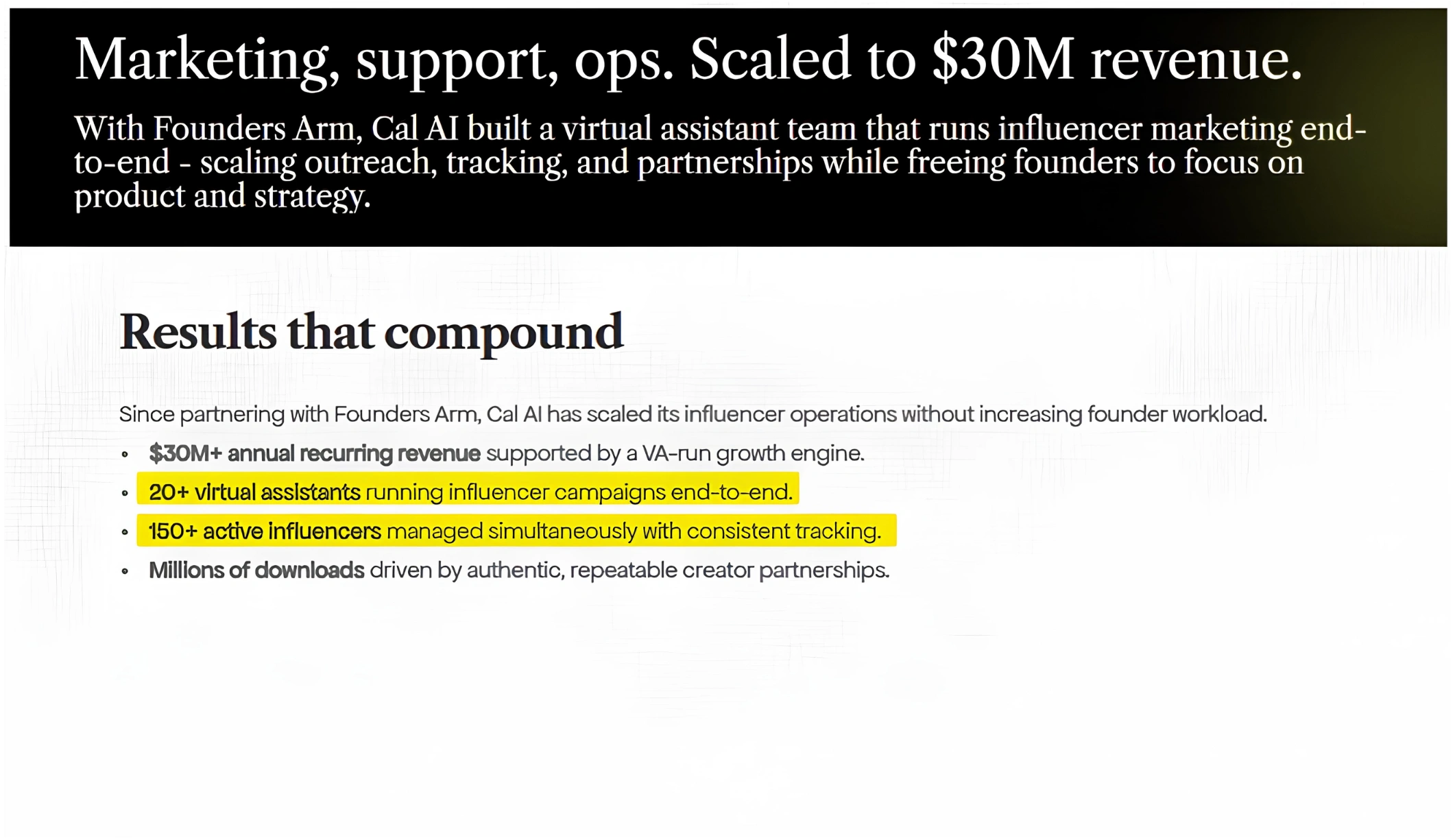
For an app referred to as Cal AI, the strategy scaled furthest — reportedly to $3 million a month — by combining volume with visibility in a way none of the other three case studies attempted.
Mass outreach at scale
Rather than hand-picking a small number of creators, this approach leaned into outreach volume — contacting a large number of potential creator partners rather than relying on a handful of hand-vetted deals.
Owning the comment section
A deliberate focus on comment-section presence under influencer posts — treating the comments as an extension of the campaign, not an afterthought, to keep engagement and conversation active under every placement.
The Mr. Beast placement — a credibility signal, not a direct-response bet
The video frames a placement with Mr. Beast's channel as valuable primarily for the credibility and brand signal it sent — not as a direct-response play expected to pay for itself on install cost alone. It's a useful distinction for how to categorize a big-name placement in your own reporting: not every deal needs to clear the Section 1 math on its own to be worth doing.

6. How to Set Up Your First Deal
Across all four case studies, the same practical checklist shows up in different forms:
• Know your RPM before you negotiate anything. You can't target a profitable CPM if you don't know what a view is actually worth to you.
• Vet on engagement quality, content fit, and organic fit — in that order — before you even discuss price.
• Build in a minimum view clause so the deal's economics don't depend on a best-case outcome.
• Consider geography as a lever. Creators outside the most saturated markets can mean lower cost and less bidding competition for the same audience quality.
• Let organic performance inform paid spend, rather than testing ad creative blind.
• Not every placement needs to hit your target CPM to be worth doing — some are a credibility play, and that's fine as long as you're labeling it as one.
🔗 FIND YOUR NEXT CREATOR PARTNER
Once you've got a deal structure that works, the fastest way to scale it is finding more creators like the one who already delivered — the same move the founders in this article made to repeat their results.
→ Find creators similar to your best-performing influencer
FAQ
What is influencer marketing for apps?
It's the practice of partnering with content creators to promote a mobile or web app to their audience — typically to drive installs, awareness, or credibility — rather than relying solely on paid app-install ads.
How do you know if an influencer deal for your app is profitable?
Compare your RPM (what 1,000 views are worth to you in revenue) against the CPM you're paying the creator (what 1,000 views cost you). If CPM is meaningfully below RPM, the deal has built-in margin before any viral upside.
What deal structures work for app influencer marketing?
The case studies above show three: a flat fee with a minimum view clause, a retainer plus profit-share, and a credibility-driven placement not tied to direct-response targets. The right structure depends on whether you're optimizing for guaranteed economics or brand signal.
Others articles