When Did Business Leaders Become 'Talent'?
Business leaders are increasingly building personal brands and attracting audiences beyond their companies. This article explores how executives became a form of talent and why their influence matters to modern marketing.
When Did Business Leaders Become 'Talent'?
The quiet rise of the B2B creator economy
Say the word influencer and most people still picture fashion, fitness, beauty, travel and discount codes. Probably not a CMO. Or an accountant. A founder. A consultant. A cybersecurity expert. Yet one of the most interesting shifts in the creator economy is happening far away from its traditional heartland. Experts from every corner of the business world are becoming creators and brands are starting to pay for that expertise the way they used to pay for reach.
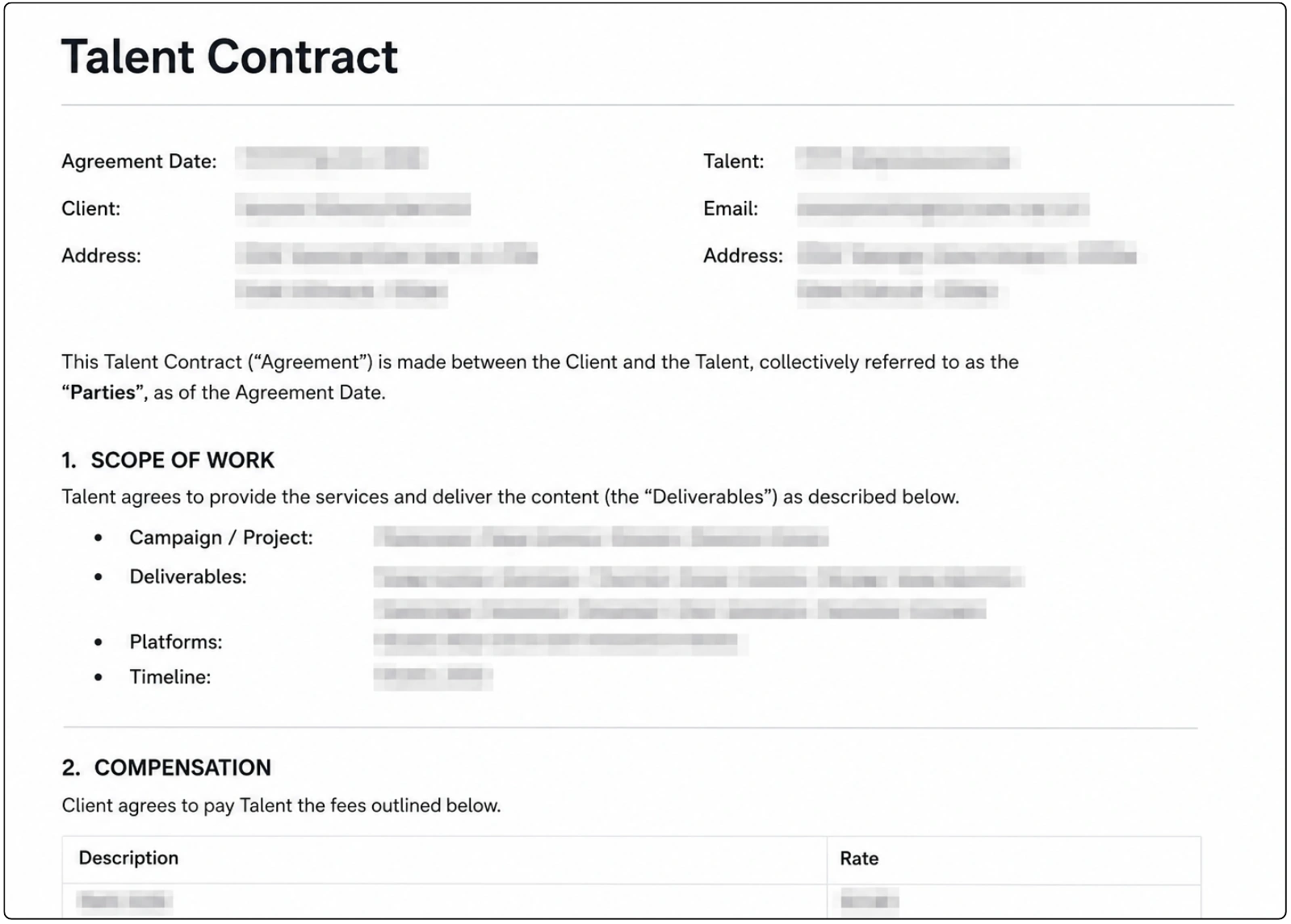
I was reminded of this recently when reviewing a creator agreement. It covered everything you'd expect: deliverables, deadlines, usage rights, exclusivity, approvals, payment terms. Across the top, two words caught my attention: Talent Contract. I smiled. Then I paused. When did business professionals become "talent"?
It's not a trivial question. The commercial value of expertise has changed, and the creator economy has entered a phase where deep specialist knowledge is now commercially valuable without needing a mass audience behind it.
Expertise has become commercially valuable
Goldman Sachs Research projected in 2023 that the creator economy's total addressable market would roughly double over five years, from $250 billion to $480 billion by 2027, driven by influencer marketing, platform payouts and short-form video advertising.
That figure gets recycled constantly, usually stripped of context. What it actually captures is the ecosystem, not any individual's earnings. And for years, that ecosystem was overwhelmingly consumer: lifestyle, beauty, fitness. Today, some of the fastest-growing creators are professionals whose authority was built long before they published a single post.
LinkedIn's own Creator Marketplace is a signal of where that growth is now coming from. It isn't built around entertainment. It's built around brands wanting access to credible experts in business, technology and professional services.
Authority now comes before audience
The traditional creator path runs:
Content → Audience → Growth → Authority
Show up consistently, build a following, earn credibility over time. For B2B creators, it's closer to the reverse:
Authority → Content → Audience
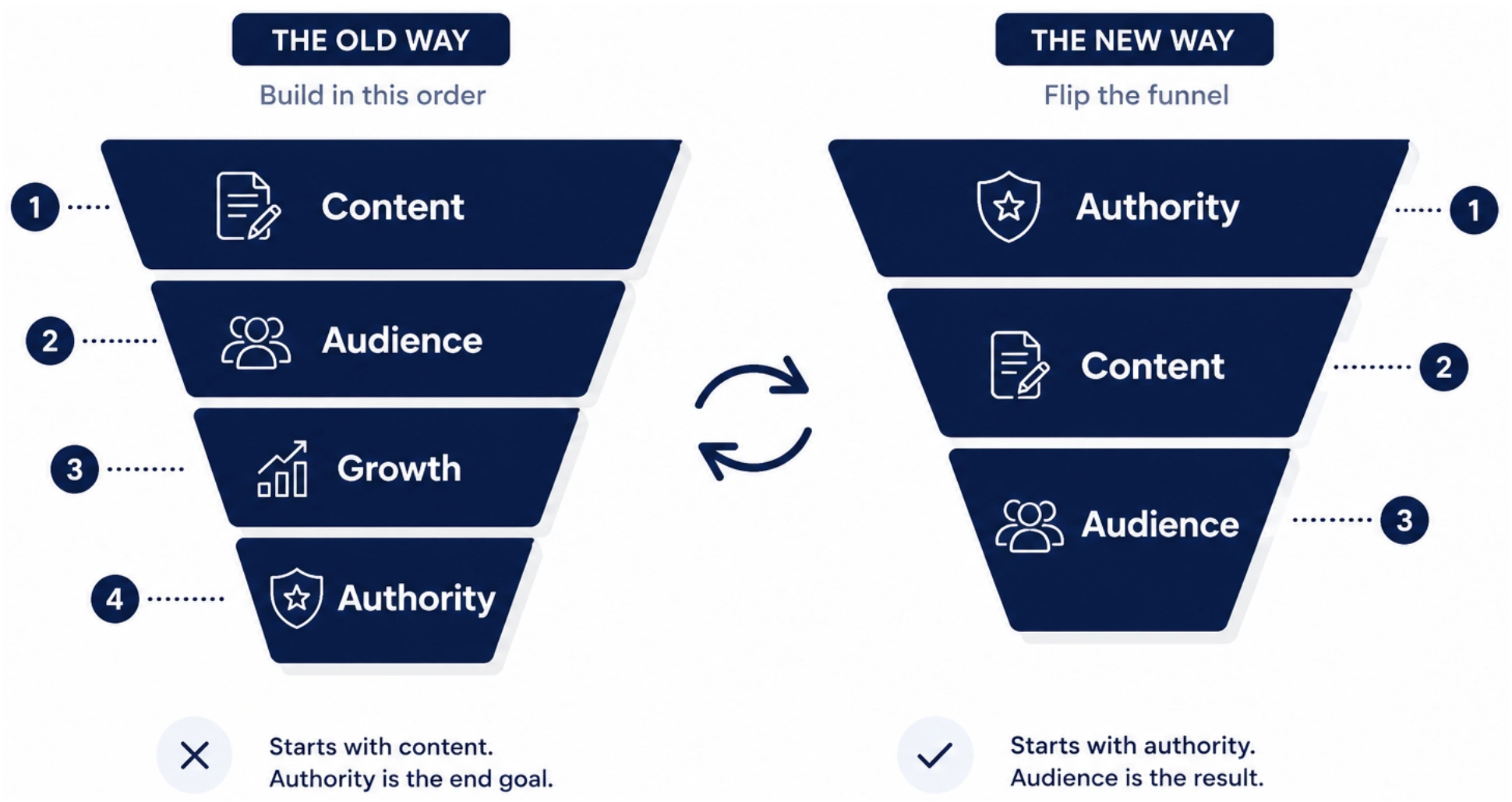
A CFO spends twenty years building expertise before writing a first LinkedIn post. A founder builds several companies before starting a newsletter. I've watched a version of this play out repeatedly inside my fractional marketing community: someone with two decades of hard-won expertise starts posting seriously for the first time, and within months brands are paying for their opinion, not their reach.
That's not a content-growth story. It's a distribution story. The expertise was already there; content just gave it a route to market. Twenty years ago, that expertise stayed inside the organisation that employed you. Today distribution is free, and anyone with real knowledge can build a following that extends well past their job title.
Why followers tell us less than they used to
I've worked with a number of early-stage AI startups over the past year, cash-strapped, building for a narrow, very specific ICP, and needing to reach exactly the right buyer fast, not a broad audience slowly. For a business like that, a creator with 500,000 followers who occasionally mentions B2B is close to useless. Someone with 10,000 followers, several hundred of them the actual CTOs, founders and heads of product they're trying to reach, is worth far more.
Follower count is a blunt instrument for this kind of buyer. The right question isn't "how many people can this person reach," it's "who trusts them, and are those the right people."
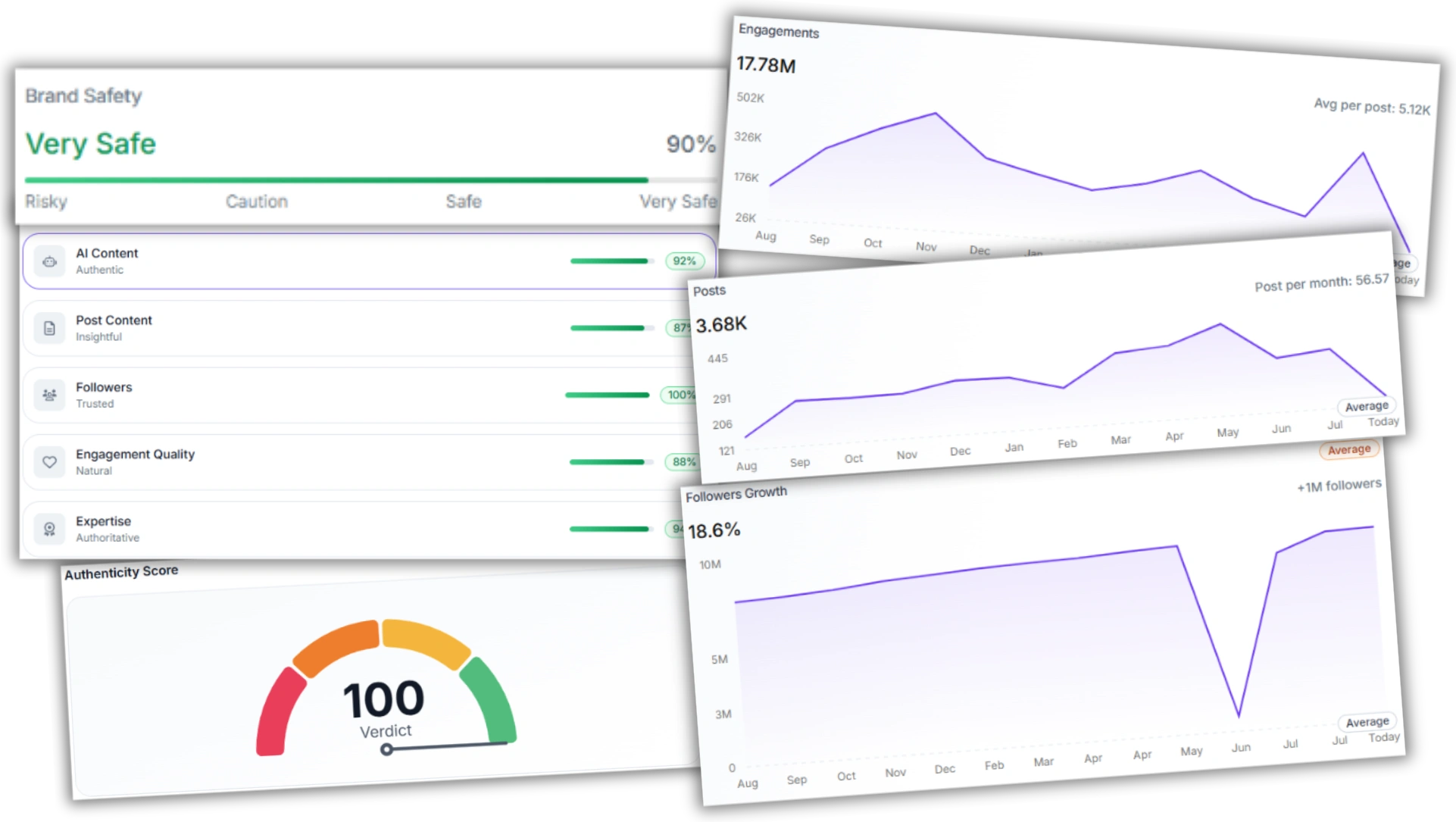
Favikon, where I'm an ambassador, is built around that distinction rather than raw reach. Its Authority Score weights audience, engagement and views rather than follower count alone, and layers in what those numbers actually mean for a brand: a brand safety read, a positivity score, where a creator sits on the political spectrum, and through its new Influence League Tables, where someone actually ranks against others in their specific niche, not the internet at large. It also now estimates a fair price per post based on that data, which does more to professionalise this market than any follower count ever did.
The contract tells us how the market thinks
That distinction, who trusts them, not how many follow them, is exactly what's showing up in the paperwork. Contracts don't just set terms. They reveal assumptions. For years, brands bought attention. Now they're buying something that took decades to build: trust, judgement, credibility.
People increasingly trust a named expert over a corporate account, and the contracts brands write reflect that; usage rights, exclusivity, paid amplification, IP. A recognition that a creator's reputation is now a commercial asset, and that the same piece of content is worth a different amount depending on where it runs, how long it runs, and whether it's amplified.
The rise of the portfolio expert
Portfolio careers are growing on the same logic. Fractional leaders and independent advisers aren't bound by a single employer's comms policy, and increasingly they're building audiences around expertise they already had.
I see this constantly through The Slice Network, the community I founded for fractional marketers, and the pattern is more specific than "some of them post online." The fractionals furthest along in their careers tend to treat it almost like a discipline: three posts a week, a set of content pillars, a point of view shaped deliberately around the ICP they actually want to work with. Not whatever crosses their mind that day.
What comes back isn't just followers. It's collaboration offers, invites onto event panels and roundtables, fractional mandates, and introductions from influencer agencies who found them through the content, not a pitch. Meanwhile our own numbers show 42% of fractionals in the network post less than once a month. So the gap between those two groups isn't subtle. For the ones posting consistently, LinkedIn was, by their own account, a genuinely better source of opportunity than the channels they'd relied on before.
Expertise became content. Content became distribution. Distribution became a revenue line.
It isn't free, and not everyone should do it
Here's the part that gets left out of most of these arguments, including, until now, this one: being a creator is not the same as occasionally posting. Every piece worth putting out takes research, a draft, often a companion asset like a carousel, an edit pass, and then, if you're serious, an hour or more afterwards actually in the comments, engaging with whoever showed up.
That's before you've factored in that if you're talking about a specific brand or technology, you'd better actually understand the product and the value proposition, or it shows immediately and it costs you the credibility you were trying to build in the first place.
So no, not every expert should become a creator. Plenty of genuinely brilliant people don't have the bandwidth, or frankly the appetite, for that cycle. Plus authority alone doesn't fix a boring post or a lazy take. It buys you a first read. It doesn't buy you a second one.
We may need a new definition of creator
The next generation of creators won't call themselves creators. They'll say founder, consultant, accountant, engineer, marketer and they'll be right to resist the label, because it undersells what's actually being bought and sold. Nobody is hiring these people for their editing skills.
The creator economy stopped being just about influencers a while ago. What it's actually building now is a market for expertise itself. Priced, contracted and distributed like any other asset, whether the person holding it thinks of themselves as "talent" or not. I'd argue that's the more accurate word for what's happening, not the more uncomfortable one.
Those two words on the contract weren't describing someone's ability to make content. They were pricing what that person already knew. Brands have worked that out. It's worth the rest of us catching up.
Others articles

.png)